



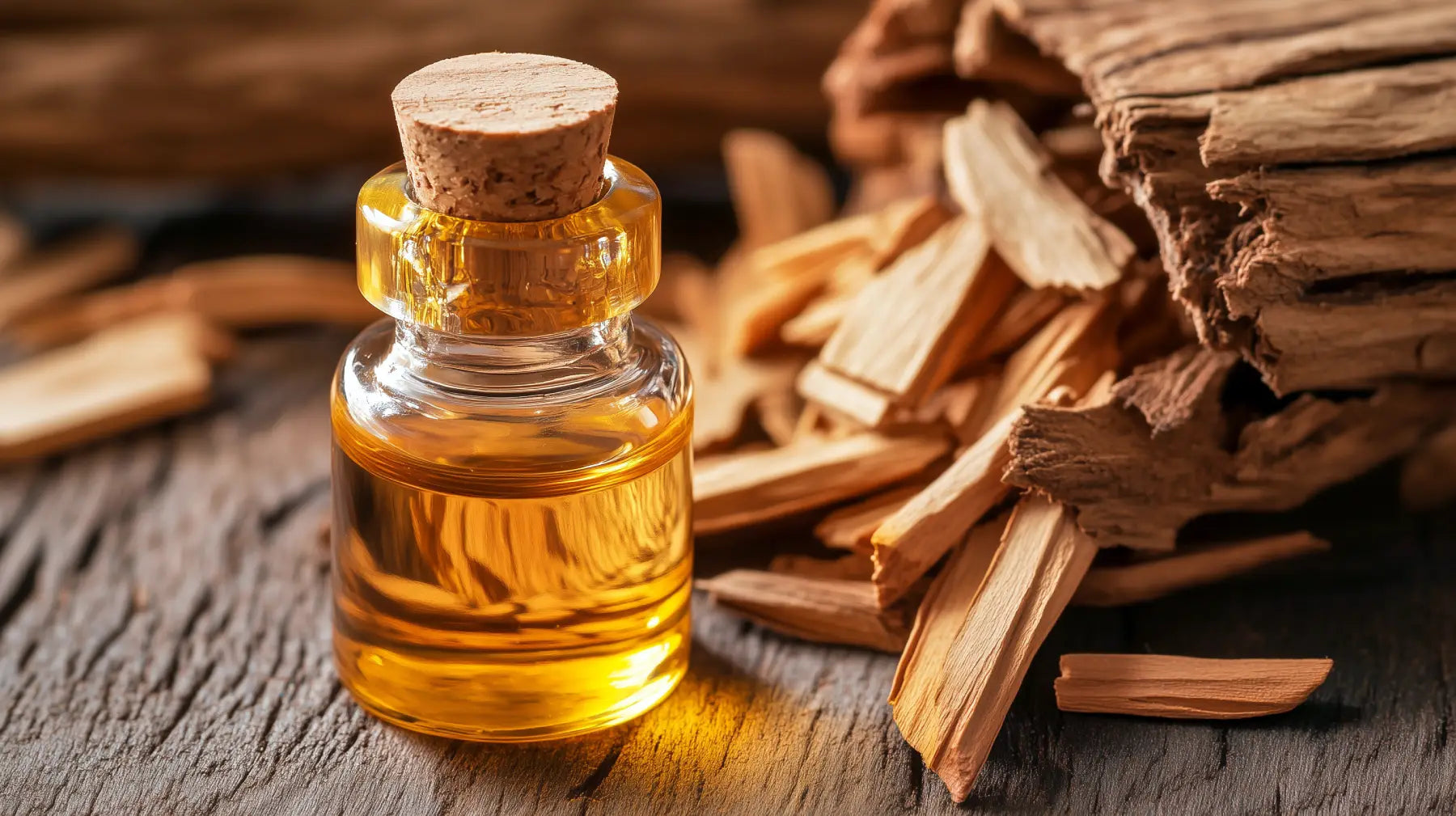
You keep seeing it popping up on fragrances, body mists, and skincare labels, and you find yourself thinking, "ok, but what does sandalwood actually smell like, anyway?" You're not alone.
Sandalwood features balsamic undertones and exotic, earthy tones, which is why it's such a popular ingredient in fragrances and skincare. This guide is for you. Before you part with your cash on a new fragrance, candle, or body lotion, you want to have a pretty good idea of what the scent is going to smell like and whether it's going to fit in with your style and daily routine, so you can really get a grasp on what sandalwood smells like.
This guide breaks down the sandalwood scent in plain language and shows how it comes to life in perfume and beauty routines. You'll get a handle on its creamy, milky texture, which is often described as buttery, providing a velvety, soft sensation, and how it might just fit in with your daily life, so you can get your hands on the sandalwood scent and decide if it's right for you.
So, What Does Sandalwood Smell Like, Then?
Sandalwood's a member of the woody fragrance family, and it's reminiscent of tranquil forests or distant landscapes. Compared to other woody scents like cedar, pine, vetiver, and patchouli, making it a real winner in the perfumery industry.
The short version is that sandalwood smell is generally described as cozy, creamy, and woody with a hint of sweet earthiness. It's woody but not harsh or scratchy; it's smooth and polished wood, and it usually works wonders as a base note.
A Closer Look At Sandalwood’s Cozy, Creamy Layers
The First Impression: Soft Wood with a Touch of Green
When you first catch a whiff of sandalwood in a perfume or body mist, the initial impression is usually soft wood with a hint of green. Sometimes, this early scent is complemented by a few hints of flowers, adding a gentle bit of complexity. It can smell like a quiet spa, a clean wooden drawer, or a soft incense stick before it really gets going, giving you that lovely soft wood with a hint of green.
The Heart: Creamy, Cozy, and soft
As the fragrance starts to settle, the scent becomes creamier and softer. Loads of people describe this stage as milky, velvety, or even slightly nutty, like the warm, comforting feeling of a cup of hot latte without the sugar, with a totally milky, velvety, slightly nutty feel.
Where Does Sandalwood Come From, and Why Does It Change the Scent
Indian Sandalwood vs Australian Sandalwood in a Nutshell
Not all sandalwood smells the same, and it's mainly because of the different regions where it grows. Traditional Indian sandalwood’s distinct aroma has been used for thousands of years for religious purification in India. Historically, sandalwood has been central to meditation and religious ceremonies in Hindu, Buddhist, and other Eastern traditions. Indian Sandalwood tree, often called Santalum album, is famous for its rich, creamy, slightly sweet character.
Indian Sandalwood has a deep, luxurious smell that people have prized for centuries in the perfume industry, rituals, and oils, almost a buttery warmth that feels rich and timeless. Due to the dwindling population of indian sandalwood, today's sandalwood oil usually comes from Australian sandalwood or New Caledonia sandalwood. Australian sandalwood and the other varieties that get used today can feel a bit drier or greener, with a fresher woody edge and not as much intense creaminess when compared to indian sandalwood.
Sustainability, Quality, and What Modern Perfumery Does
Because wild sandalwood has been overharvested in some places, a lot of brands are really careful about where they source their sandalwood from and the quality of the materials they use. As a result of high demand and overharvesting, there's been a pretty big decline in sandalwood availability. Modern perfumery sometimes mixes sandalwood extract with carefully designed alternatives to protect the forests.
Expensive Wood and Sandalwood Production
Sandalwood is often considered one of the most expensive woods on the planet, and for good reason. The Indian sandalwood tree, known as Santalum album, is the gold standard for its oil production. This tree's heartwood is where the rich, smooth oil comes from, which so many people love for its signature woody aroma. Harvesting sandalwood is a slow and careful process; the sandalwood trees can take decades, sometimes up to 80 years, to mature enough for their heartwood to be used.
Synthetic vs Natural Sandalwood scent
Now that sandalwood has become so popular, Ethical brands have turned to sustainable alternatives, including lab-grown sandalwood oil and synthetic substitutes that replicate its scent profile. That's where synthetic sandalwood comes in; it's created from a mix of organic and artificial compounds that are designed to mimic the scent of true sandalwood extract. These blends can capture the sweet, woody, and slightly spicy notes that people love in organic sandalwood, but often lack some of the depth and complexity of the real thing.
Sandalwood essential oil in Different Products
Sandalwood is so versatile that its scent shows up in a really wide variety of products, each one giving you a different way to enjoy its grounding, luxurious aroma. In soaps, sandalwood extract is often blended with other ingredients like rose or patchouli, creating a fragrance that feels both comforting and sophisticated. These combinations make for a bathing experience that's as soothing for the mind as it is for the skin.
Candles infused with sandalwood are a favorite for making your home feel warm and inviting. The fragrance composition often includes hints of other organic notes, adding complexity that transforms your space into a sanctuary. In perfumes, it's the secret to a scent that lingers and evolves, adding richness and a touch of luxury to any fragrance. Whether you're lighting incense, lathering up with soap, or spritzing on a favorite perfume.
The Benefits of Sandalwood Oils
A Scent That's Much More Than Just a Pretty smell
Sandalwood Essential Oil is more than just a beautiful smell; it's an organic remedy with a rich history as an agent of well-being and peace of mind, one that's been around for ages. It's crammed full of calming compounds that make it a popular pick in aromatherapy and well known for its ability to ease stress and bring a sense of tranquility, making it a staple in the world of research on how smells can affect our mood.
Sandalwood Candles and Home Fragrance, Elevating Your Space
If you're looking to create a sense of refinement and calm in your home, then a sandalwood candle is a pretty great place to start. The woody aroma of sandalwood oil, which often gets paired with sweet notes like vanilla or the bright citrus of clementine, fills the air with a subtle, complex fragrance that just keeps on giving long after the candle's snuffed out. Sandalwood candles are hard to beat when it comes to making your home feel welcoming and stylish at the same time.
Their natural sweet scent has this amazing ability to calm you down and ease stress.
Is Sandalwood Right for You? How is it going to wear on your skin and in your daily life?
A Fragrance that fits in anywhere
Sandalwood belongs to the woody fragrance family, but what's great is that it's got a pretty neutral appeal; it's one of those scents that can be found in a wide range of perfumes because it doesn't really belong to any one particular style. It pairs well with earthy and musky scents like patchouli and vetiver, creating a complex and delicious woody combination.
In blends, sandalwood pairs beautifully with floral notes or vanilla; it takes on a romantic, cuddly vibe, but in spicier, smokier blends, it gets a bit deeper and more confident. Sandalwood can also be layered with black tea to enhance the sweet and floral notes of this classic fragrance, while it also pairs well with citrus scents like orange blossom and clementine to create a light, bright fragrance with an earthy twist.
When Sandalwood will be perfect (and when it might not be)
Chances are you'll love sandalwood if you already reach for warm scents like vanilla, amber or soft musk, scents that just make you feel like getting a hug, a scent that makes you feel like being wrapped in a warm blanket, but if prefer ultra-fresh aquatics, icy mints or super-sharp citrus and can't stand anything that has even a hint of warmth, then a sandalwood heavy scent might be a bit too enveloping, in that case, look for formulas where sandalwood takes a back seat.
Notes that get along with Sandalwood: Pairings, Families, and Similar Scents
Classic Pairings: Citrus, Florals, and Amber
Sandalwood gets even more beautiful when it's got the right mix of notes. Bright citrus notes like bergamot and orange add a bit of zing to the wood and prevent the whole thing from feeling too heavy and creamy.
Sandalwood enhances the longevity of floral fragrances, making it a popular choice for blending with white florals like magnolia and gardenia. plays perfectly against that warm base, and with notes like amber, musk, vanilla, or tonka bean, you get the cozy, dressed-up effect that people love in evening perfumes.
Other woods and notes you might confuse with Sandalwood
How to tell if a scent is sandalwood from other notes
Because sandalwood is a woody note, it often gets compared to other woods. Cedarwood is usually drier and sharper, a bit like pencil shavings, while vetiver leans more earthy and grassy, with a touch of smoke. These notes can be bolder or more divisive, while sandalwood smells like a family reunion, giving the same level of sophistication but in a softer, more subtle way.


