



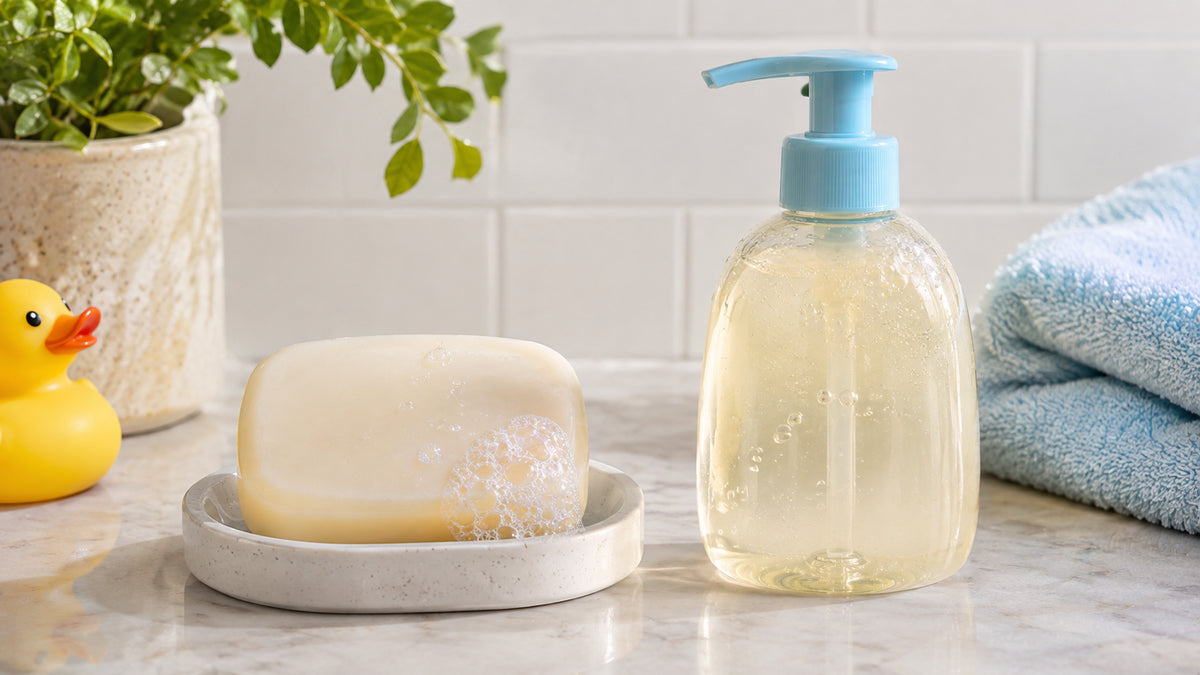
It can be confusing to choose between baby soap and body wash, especially if you're not familiar with bath time products for babies and their formulas. Both are effective for gentle cleaning, but their formulas are indeed quite different from each other. Choosing one or the other will come down to how your baby's skin responds to the product and how it adapts to your daily routine.
Understanding Your Baby's Skin
Skin has a protective natural oil barrier that is still developing for babies during the first months of their lives. Baby skin loses moisture easier can be more sensitive to product ingredients when compared to adults since baby skin is three times thinner than adult skin. Hot water, dry weather, and the wrong cleansers can worsen irritation in a baby.
Babies' delicate skin doesn't need either strong soaps or an excessive amount of bath products. Gentle cleansing, careful rinsing, and moisturizing as needed can be sufficient.
Baby Soap vs. Body Wash: Key Differences
The most evident difference is presentation: baby soap comes in a bar just like traditional adult soap, while a body wash is liquid and, in some cases, it can be used on the whole body. Presentation doesn't affect either's quality, but traditional bar soaps are usually more alkaline, while, on the other hand, liquid washes usually have a pH-balanced formula that tends to be more skin-friendly.
Baby Soap: Benefits and Drawbacks
A soap bar is usually cheaper and produces less waste. It doesn't leak, and it requires simpler packaging. There are some bar soaps that include glycerin and oil in their formula that help reduce the dry sensation after showering.
Traditional alkaline soaps disrupt the skin's pH and can cause a tight sensation because they start stripping natural oils from the skin, particularly after frequent baths or in hard water. Wet bars become slippery, dissolve faster, and can harbor bacteria if they are left wet. If you prefer a bar, favor a mild baby-specific one and let it dry after bathing your child.
Baby Body Wash: Benefits and Drawbacks
Parents may favor a safe body wash in a liquid presentation if they are looking for a simple bath routine; liquid dispensers are easier to use with one hand since they come with a pump mechanism, and many of their formulas combine both body and hair cleansing ingredients that won't affect the skin barrier.
Pediatric dermatologists generally prefer liquid baby body wash for daily use.
Liquid body washes are usually more expensive and require larger packaging; they can also leak. Water-based formulas need preservatives to remain safe while they are stored. A liquid label doesn't guarantee that they are gentler on the skin since they can contain strong fragrances or harsh chemicals in their formula that could cause irritation. For dry or reactive skin, consider a mild fragrance-free wash.
Ingredients to Look For and Avoid
Ingredient lists matter more than "natural" or "non-toxic" claims. Look for a cleanser formulated for infants without harsh cleansing agents and preferably without added synthetic fragrance. Take these ingredient groups into consideration:
-
Gentle surfactants: These remove dirt and oils. Mild cleansing agents are preferable to formulas that leave skin feeling excessively dry.
-
Moisturizing ingredients: Glycerin helps attract moisture, while ingredients like shea butter and coconut oil can help soften the skin. Their benefits depend on the formula in general and not just one featured ingredient.
-
Preservatives: These protect water-containing products against microbial growth. Their presence alone isn't a reason to reject a body wash.
-
Fragrance and dyes: They aren't necessary for cleansing and may irritate sensitive skin. Fragrance-free is a sensible choice, particularly for newborns.
Some babies can also react to individual surfactants or preservatives. Rather than treating every unfamiliar chemical name as harmful, check the full formula and stop using a product if it appears to cause a reaction. "Hypoallergenic" and "dermatologist-tested" can be useful shopping cues, but neither guarantees that a product will suit every child.
How to Choose the Right Cleanser
Start with your baby's age and skin condition. Newborns generally need very little cleanser; use a small amount only where necessary. As babies become more active, cleansing may be needed more often, but it should still be gentle.
Next, think about how the product fits your household. A mild bar might suit occasional baths or travel, while a pump bottle is easier for a parent handling bath time alone. If your water is hard or the weather is dry, watch for tightness or flaky patches after washing and consider a gentler, moisturizing formula.
When comparing products online or in a store, check the age guidance, fragrance labeling, instructions, and whether the wash is intended for both hair and body. Read reviews for practical details such as dispensing, rinsing, and packaging. When comparing a body wash, "EWG Verified" showing on the package is a good sign that they have no harmful undisclosed chemicals. Remember that another baby's skin response may differ from your own child's.
Don't replace a well-tolerated cleanser just for better packaging or promotional claims.
Special Considerations for Sensitive Skin and Eczema
Always look for products labeled hypoallergenic and free from harsh sulfates and parabens; babies with eczema-prone or particularly sensitive skin may need extra care. Choose mild, fragrance-free products, avoid experimenting with several new items at once, and keep baths short and comfortably warm. Gently pat the skin dry rather than rubbing it, then use a suitable moisturizer as recommended for your baby's needs.
If a cleanser seems to cause redness, dryness, or discomfort, stop using it and monitor the reaction. Persistent rashes, broken skin, or worsening eczema deserve advice from a pediatrician or pediatric dermatologist. Sensitive-skin labeling isn't a substitute for medical guidance.
A Simple Baby Bath Time Routine
Bathing doesn't have to be complicated. Young babies often need only a few baths a week, with gentle cleaning of the diaper area, face, and skin folds between baths.
-
Prepare a small amount of comfortably warm water and keep your supplies within reach.
-
Use a little cleanser on your hands or a soft washcloth. For a bar, lather it in your hands rather than rubbing the bar directly over the baby's body.
-
Clean areas that need attention, especially skin folds, hands, and the diaper area, without scrubbing.
-
Rinse thoroughly, pat dry with a soft towel, and moisturize if the skin needs it.
-
It's not necessary for you to bathe your baby every day; bathing frequency for infants is recommended to be 2–3 times a week.
Never leave a baby unattended in water, even briefly; keep your baby supported throughout.
Cost, Convenience, and Sustainability
If both products suit your baby's skin, practical factors can decide. Bars generally require less packaging and are easy to pack without worrying about spills. Liquid washes are quicker to dispense and may replace separate tear-free shampoo and body cleansers, although bottles produce more waste unless refill options are available.
Compare cost per use, not just shelf price: a larger bottle isn't automatically better value if you use more product at each bath. A smaller first purchase lets you test suitability before buying more.
Frequently Asked Questions
At what age can I start using baby soap or body wash?
Newborns usually need minimal cleansing, and plain water is often enough. When a cleanser is needed, choose a mild infant formula and use only a small amount. Ask your pediatrician if you're unsure how to bathe a newborn before the umbilical cord stump has healed.
Is body wash better than soap if we have hard water?
It can be. Minerals in hard water can react with traditional soap and leave residue, while some liquid cleansers rinse more easily. The formulation matters more than the format, so look for signs of dryness and adjust your choice accordingly.
Can I use the same non-toxic baby wash for hair and body?
Yes, if it is labeled for both uses. A head-to-toe wash can simplify bath time, especially for newborns who don't need several separate products. Follow the instructions and take care to avoid getting cleanser in your baby's eyes.
How do I know if a cleanser is irritating my baby's skin?
Watch for new redness, dry patches, bumps, or discomfort after bathing. Stop the suspected product and speak with a pediatrician if symptoms persist, spread, or become more severe. Bath-time reactions aren't always caused by cleansers, so avoid frequent changes without guidance. Avoid baby washes with sulfates to protect delicate skin.


