

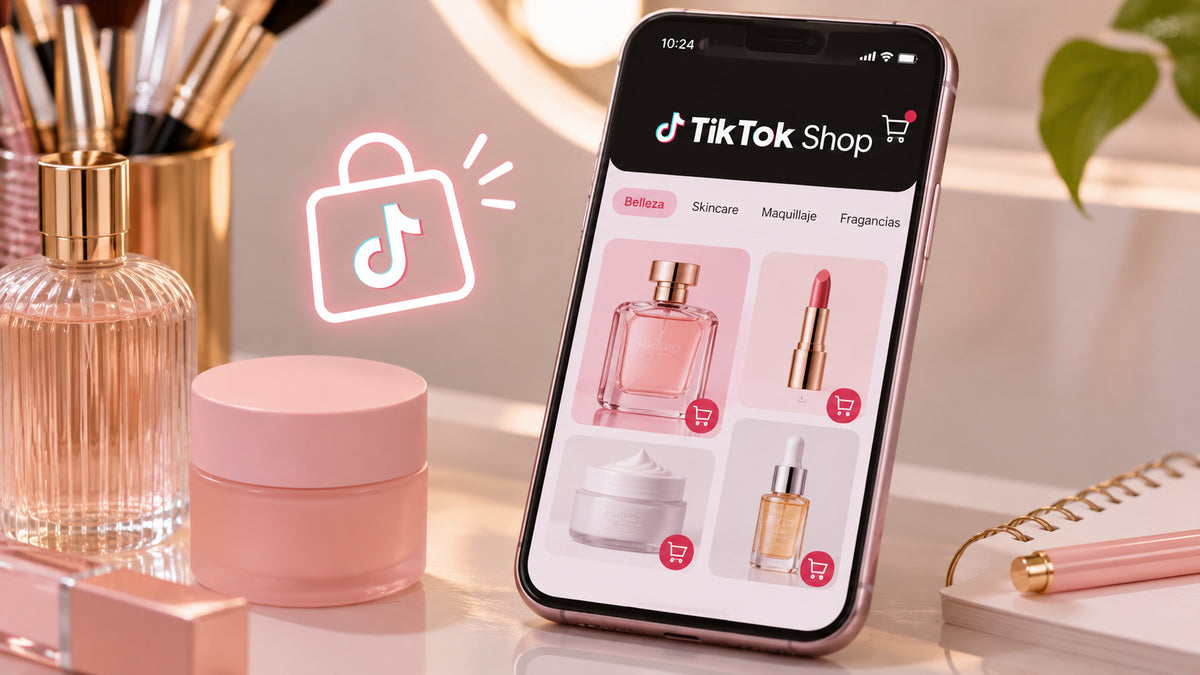
Whether it's a foundation match, a mascara test, or a hair styling tutorial, there's often a final question to be answered before someone will commit to buying a beauty product. TikTok Shop allows creators to answer it and link the product directly in their video for easy checkout. By using TikTok Shop for beauty affiliates, brands can partner with creators to help drive sales to their audience of beauty fans.
According to a US report in March 2026, health & beauty products saw 84% year-over-year growth on TikTok Shop. US households were estimated to spend $118 p.a. on TikTok Shop, making 3-4 purchases per year. For established beauty brands, repeat buying makes it worth tracking whether creators are bringing in new customers or reaching shoppers who already know the product.
How the TikTok Shop Affiliate Program Works for Beauty Products
Affiliate marketing on TikTok Shop connects creators with sellers who offer commissions on eligible purchases. Creators can find qualifying products via the Product Marketplace to sign up for and insert shoppable links into their engaging videos/livestreams. If a qualifying purchase is credited to the creator's video/livestream, they will receive the applicable commission rate for the offer. It is the Seller who is responsible for fulfilment, shipping, and any returns. Should a product be dispatched late or the order cancelled, this will impact the customer's experience of the Creator's product suggestion, so it is important to consider Seller performance when selecting products. TikTok Shop affiliate commissions typically range from 10% to 20%.
Affiliate Center lets beauty and skincare brands manage affiliate sales rates, run public or invite-only campaigns, and track orders attributed to individual creators/products. Note that a customer may engage with multiple creators' content and click through from one of them to complete their purchase - this will still be attributed to that one last creator. This is useful to consider when re-inviting creators and/or testing content formats.
How TikTok Shop Compares to Other Beauty Programs
Many e-commerce platforms utilise affiliate links, which redirect their customers to a merchant's website to make a purchase. TikTok Shop differs in that it enables TikTok creators to showcase a product (and the advantages it can offer) and direct their followers to purchase via a link embedded in the video or live shopping event, all within the TikTok app. This could form a useful element of an affiliate strategy for personal care brands, as it combines product demonstration with TikTok's highly engaged audience. Creators can review the various affiliate programmes and compare commission, product range, and other conditions to find the best match for their content style.
TikTok Shop Creator Content Types and U.S. Eligibility
There are different types of creator accounts, which will determine what catalog you're able to promote on TikTok and if you can collaborate with more than 1 seller. Your standard TikTok account is where you'll create and post content, and your TikTok Shop creator account (if eligible) is what you'll use to sell via TikTok Shop.
|
Creator type |
How you join |
Products you can promote |
|
Affiliate Creator |
Apply independently with at least 1,000 followers. |
Eligible products from multiple sellers in the Product Marketplace. |
|
Marketing Creator |
Accept a seller’s invitation to link your account to its shop. There is no follower minimum to link the account. |
Products from the linked shop. Access to other sellers’ products requires separate affiliate permissions and a 5,000-follower threshold. |
|
Official Shop Creator |
Accept an official invitation to link your account to a shop. There is no follower minimum to link the account. |
Products from the linked shop only. |
To become a creator on TikTok Shop in the US, you need to be over 18 years old, reside in the US, and satisfy the criteria of TikTok. As an independent affiliate, you will be required to pass various identity verifications through TikTok Shop. If you have less than 5k followers, you will be enrolled in a trial period of a minimum of 30 days, during which your product catalogue and frequency of shoppable content (i.e., videos/live streams) may be restricted. Familiarise yourself with these restrictions before planning your content cadence.
How to Apply as an Independent Beauty Affiliate
-
Open your TikTok profile and select TikTok Studio. Under Monetization, select TikTok Shop for Creator, then Join now.
-
Submit the application and follow any prompts to confirm your age or verify your identity. Check the status of the approval process in the app before agreeing to a posting date.
-
Once you have access, open the Product Marketplace and review the terms for the products you want to promote. Check that the exact item or variant in your video matches the listing you tag.
If you're invited to join a seller as a Marketing Creator or Official Shop Creator, check the account link type on your invite, because your eligibility to feature certain products depends on it.
How to Choose Beauty Products to Promote
Begin with a product you're familiar with and can speak to any questions your viewers might have about it. For instance, if you make videos about affordable makeup, you may be asked about how a product performs in natural light, if it creases on drier areas of the face, longevity, etc. This will help guide your decision to feature that product and what your video will consist of.
On the Product Marketplace page, explore different product categories, take note of the seller reviews, lead time, and product details. You should see information about ingredients, how to use, available shades, and images of the product to be received. Ensure the shade(s)/bundle you plan to feature is in stock before you film your video. Also note if you are being offered a sample and if there are any terms around creating content for the brand.
A combination of trend-based and staple everyday items will be ideal for you to test out. For example, a lip product that changes colour could be eye-catching to show in a video, whereas a face wash can be incorporated into many videos throughout your channel. You can then compare conversion rates from each link-out. It's no use promoting a product with a large commission if the product information is lacking or the stock frequently sells out of your promoted product/colourway.
Beauty Affiliate Videos and Live Shopping
When you're planning your content strategy, pick a format based on a question your customer would want to know prior to purchase. Showcase products at the start of the video and mention what you're reviewing. Direct them to your product when appropriate, and be specific (i.e., shade/size/product bundle) so they know what to look for.
-
Application demos. Show a product going on and the finish it leaves. For before-and-after footage, keep the lighting, camera angle, and distance consistent. For a wear test, state how long you wore the product and show how it looks at the end.
-
Routines. Build the video around a specific use, such as a quick morning makeup routine or wash day for curly hair. Explain what each beauty item does and tag the products you actually show. If you feature a bundle, spell out what comes in it.
-
Swatches and shade guides. Show several shades in the same lighting and describe their undertones. Mention your own skin tone where it helps the viewer interpret the result. Include the shade name on screen so viewers can find it again.
-
Focused comparisons. Answer one practical question, such as how much coverage you get from one layer versus two. Keep application conditions consistent so viewers can see the difference and judge what would work for them.
Go live if you think your audience will have questions. Pick a topic ahead of time, get your products organized in the order you'll show them, and pin them along the way. Allow time at the end to field questions on feel, colour, usage, contents of a bundle, etc. If working with a partner/brand, pre-determine who will demo and who will monitor the comments, relay availability, and communicate any offers/promotions. Remind viewers of the product and your affiliate link as needed (i.e. for those joining mid-stream).
Commissions, Samples, and Creator Partnerships
A lot of brands are recruiting creators with notable TikTok presence these days; an offer from an affiliate network may come at a base rate, an increased rate based on the number of sales, or a special introductory rate. You may also be offered a set amount to produce the video as sponsorship. Make sure you know the commission rate for the specific product you're promoting, if there is a time limit on this rate, and if returns/refunds will reduce your payout. If the vendor would like to use your video in paid promotion, negotiate this in advance and have it documented (where it can be used, duration, payment).
When sending free samples to creators on a brand's behalf, be sure there's a clear rationale behind picking that product for that person and their target audience. Choose a product that will fit into their content/life and establish whether you're requesting a post, and note the date the product is sent out. E.g., a skincare brand can seed to multiple creators that create content around their skincare regimen. Monitor how many of the seeded products result in a post and how many result in sales prior to seeding further products.
Creators can make an open offer to begin with and follow up with sellers once they have some success to show. Once they have a number of successful posts/orders for a product, they can send these to sellers with their audience demographics and an offer (e.g., wear test, live with seller, product bundle to complement a routine, etc.).
Beauty Claims and Affiliate Disclosures
Beauty affiliate content has stricter rules than other categories. Make sure US viewers know about any affiliate relationship/how you're making money off your recommendation (i.e., affiliate link, free product, sponsored) because brands can be liable for creators' non-disclosure of paid partnerships. You should disclose this in your video (on-screen and verbally) and can also mention it throughout if you're doing a live. For example, "I will make a commission if you purchase from my link" is sufficient.
Be sure that any beauty claims stay focused on the product itself and the way it's used. E.g., describing the appearance of skin after using a moisturiser will be a cosmetic claim, whereas claiming to cure/treat a skin condition such as eczema will be a drug claim. Some products (e.g., sunscreens, acne treatments) may fall under the FDA's definition of a drug, so ensure claims align with the product's labelling. Provide influencers with a concise brief of acceptable claims, directions for use, and what to avoid. Scrutinise the content (including captions, effects, before & after imagery, etc.) prior to releasing payment.
How Beauty Brands Can Run and Scale an Affiliate Program
Begin with a curated set of products with good listing detail, consistent availability, and healthy margins to account for affiliate commission and product samples. Define the parameters of your offer in Affiliate Center and vet candidates on the relevance of their following, ability to showcase your products, and track record of sales (if applicable). Consider including up-and-coming affiliates that can speak to customer queries you know your audience has.
Create a recurring weekly task to track inbound applications, samples sent, content published, and orders received. Have a point person to respond to creators and note any OOS items. If a shade goes OOS that was featured in a creator's post, reach out to them and decide if you want to stop pushing the product or ask them to create a 2nd video with another shade. Track samples sent and content published in one place to be able to draw a correlation between the two and orders received.
As your program scales, identify tasks that your team is consistently falling behind on. Shipments going missing? Consider consolidating sample management in one place. Briefs and/or T&Cs getting lost in comms? Add them to the relevant creator's profile. There will come a point where you want to implement a recruitment platform, sample management tool, and/or track content licensing; just make sure it's addressing a pain point. Diversify your roster of creators to reduce the risk of any single creator/product stock-out impacting your programme. As the program grows, established and individual brands can also consider working with coupon partners alongside creators, depending on their promotional goals. Track each partnership separately to understand how discounts and creator content contribute to sales.
Metrics That Help Creators and Brands Improve
TikTokers can track the process that goes from views to product clicks to completed orders. A video with a lot of views and few clicks may need a clearer demo of the product or a more specific call to action. If one of your products is having a strong number of clicks but a weak number of orders, you should take a look at the listing, price, availability, and the shipping terms. You also need to be mindful of returns. If there is a shade that's generating a lot of orders but also generating a lot of returns, maybe it needs a clearer swatch or a better undertone explanation.
Brands will be able to see GMV (gross merchandise value), orders placed, returns, and commission fees per creator and/or product. Sample and paid post spend should be considered when evaluating if you'd like to work with the creator again. If data is available, look at the breakdown of new vs. repeat customers. Both may be beneficial to a brand, i.e., driving new customers to the brand vs. driving repeat business, and can have comparable GMV. AOV (average order value) can help identify if a customer is likely to make additional purchases with the brand (i.e., try a routine) vs. only one product (e.g., watch a product tutorial). Similarly, time elapsed since samples were sent can help inform if a new seeding programme has had adequate time to convert to sales.
Test one variable at a time. For example, use the same product and offer to compare a demo that opens with the finished look against one that opens with application. Review product clicks and completed orders over comparable periods, and note any price changes, promotions, or stockouts. If a creator consistently sells a few products with manageable return rates, those results give you a concrete basis for agreeing on the next offer.
Frequently Asked Questions
Does a bigger following mean higher affiliate earnings?
Your follower count will dictate what you are able to unlock on the platform. You can work out how much you may earn by taking the commission on the product and multiplying by the number of sales you anticipate (accounting for returns/cancellations). Compare this to the cost of purchasing and time spent on creating content for each product. You should be able to gauge from your initial offers how much your following will engage before committing to a heavier workload.
Can I reuse my beauty affiliate videos on other platforms?
Look at your collab agreement to see if your engaging content can be reused and on which platforms. If it can, simply change the CTA to suit the platform and retain the disclosure note. Note that any TikTok Shop links will not be present on the repurposed content.
What if TikTok Shop isn’t available in my country?
You can still create a body of work showcasing beauty products (try-ons, swatches, how-to's, etc.) and take advantage of any affiliate links you may have access to in your area. Save any posts where you received enquiries/traffic to products. This will be useful when approaching brands once TikTok Shop is made available to you.


