



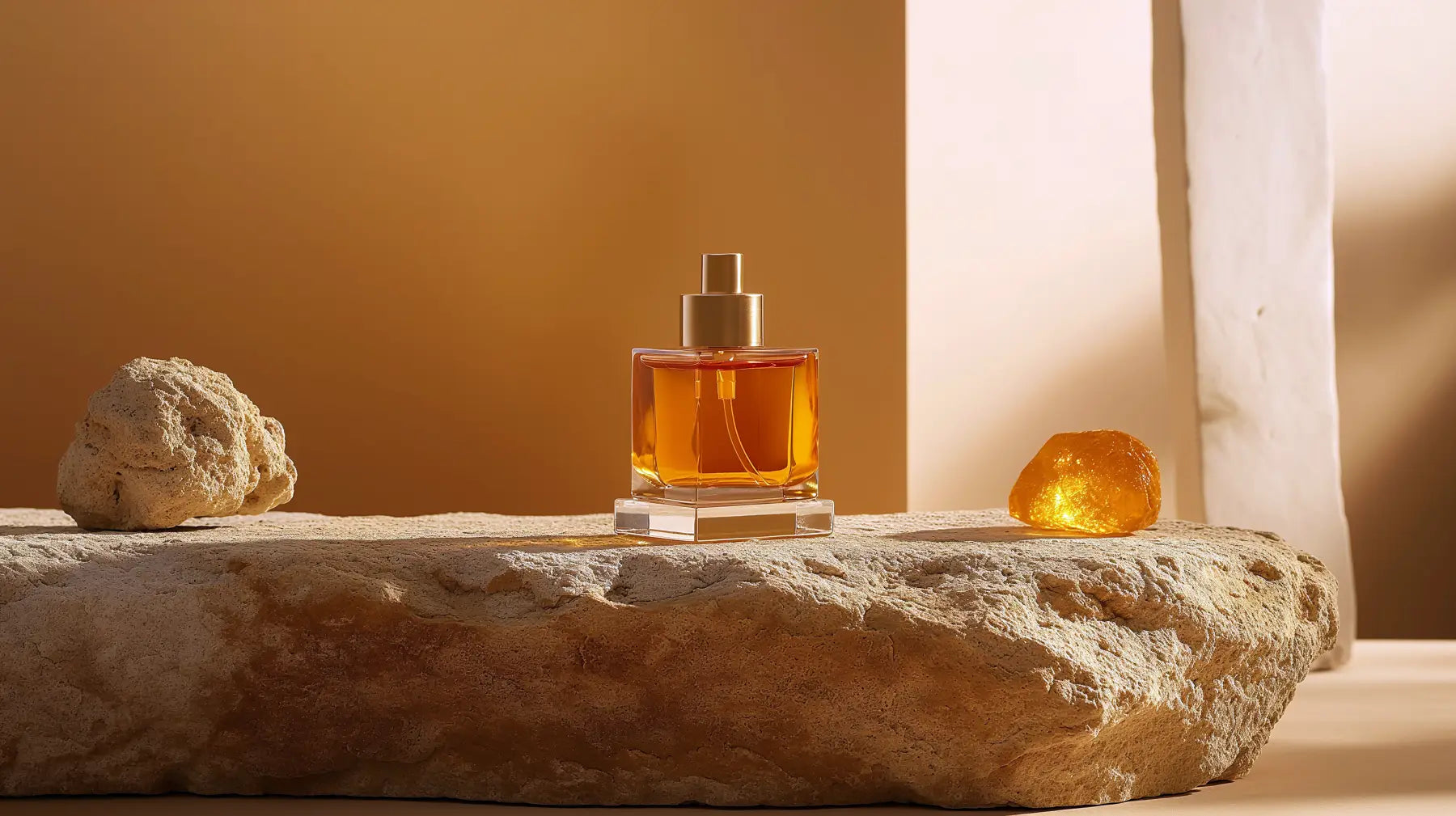
Perfume is not a mysterious potion. For centuries, perfume has been used in various cultures for both cosmetic and ceremonial purposes. It is a careful mix of scented ingredients and a carrier, created to smell a certain way on your skin and in your space.
Once you understand the basic building blocks, it becomes easier to read a notes list, choose a concentration that fits your life. The importance of the sense of smell has been recognized since ancient times, as scent can evoke powerful memories and emotions, making perfume a unique and personal experience.
Quick Answer: What Are Perfumes Made Of?
Perfume is usually made of fragrance oils, alcohol, a little water, and a few quiet helpers that keep everything stable and clear. The fragrance oils provide the actual smell, the alcohol and water help that smell spread and evaporate on your skin, and stabilizers or colorants protect the formula so it looks and performs the same in every bottle.
To create a perfume or cologne from natural ingredients, they need to have their oils extracted. This process, known as extracting scented oil, uses methods like distillation or pressing to capture aromas from plants, fruits, woods, or even animal secretions. Synthetic chemicals are also used for scents that cannot be naturally extracted or do not produce essential oils.
The Main Ingredients in Perfume (and What Each One Does)

Fragrance Oils: The Heart of the Scent
The scented part of perfume is usually called the perfume concentrate or fragrance oil. It is a blend of many ingredients that together create the smell you recognize as your favorite fragrance. Some of those ingredients are natural, such as essential oils or extracts from flowers, fruits, woods, spices, and resins.
The process of extracting plant oils and developing a perfume involves collecting ingredients and then using methods such as solvent extraction, steam distillation, expression, enfleurage, and maceration. Others are synthetic perfume molecules that either copy a smell from nature or create something completely new. Historically, perfume oils have played a significant role in perfumery, with traditional extraction methods evolving over time to obtain aromatic substances from plants and animals.
Alcohol: The Invisible Carrier
In perfumery, alcohol is the carrier that allows fragrance oils to be dissolved and dispersed evenly in the perfume, fragrance oils are dissolved in alcohol to create a uniform and sprayable solution.
Most modern perfumes use cosmetic grade ethanol as the main carrier. It holds the scented oils in a clear, fluid state and helps them travel from the nozzle to the air around you. That cool, airy feeling you notice when you spray perfume on your neck or wrists comes from the alcohol evaporating quickly on your skin.
Alcohol does three important jobs:
-
It thins the perfume concentrate so it can be sprayed in a fine mist instead of poured.
-
It helps the fragrance project, meaning people can smell it around you and not only when their nose is right against your skin.
-
It supports the way notes unfold over time. As the alcohol lifts away, the lightest molecules go with it, leaving space for the deeper notes to appear.
Water and the Quiet Helper Ingredients
Alongside alcohol, many perfumes include a small amount of water. Water helps adjust the strength and feel of the perfume on the skin. It can make the overall base a little softer and more comfortable, especially in lighter concentrations like eau de toilette or body mists. You may not consciously notice the water, yet it influences how the liquid moves and feels when you spray.
Then there are the quiet helpers. These are ingredients you rarely think about, but they keep your perfume stable from the day it is bottled until the day you finish it. They can include: Stabilizers and antioxidants, filters and even a touch of colorant.
Natural vs Synthetic Ingredients: What Really Matters

Essential Oils and Extracting Scented Oil from Natural Extracts
When people hear “perfume” many immediately think of flowers, fruits, and herbs. Those are very real parts of perfumery. Natural ingredients are materials extracted from plants, woods, spices, and resins. They include essential oils, absolutes, and resinoids. Perfumers obtain them using methods like steam distillation for flowers and herbs, cold pressing for citrus oils, or solvent extraction for delicate blossoms that would be damaged by heat.
Ancient civilizations used aromatic flowers and different types of wood to create perfumes. The Egyptians were known to use enfleurage, a technique for extracting fragrance from flowers, later adopted by French perfumers. And the distillation process for extracting perfume oils was invented by the Persian chemist Avicenna in the 10th century.
Naturals have a beautiful complexity that can feel alive on the skin. A single rose absolute can contain hundreds of different aromatic chemicals or components, which is why natural rose smells rich and multi-layered. Balsams and resins, such as benzoin and frankincense, add depth to fragrances. Natural fixatives include resins like frankincense and myrrh.
But sometimes, natural ingredients can be difficult to harvest, like natural animal oils.
Aroma Molecules and Why Perfumers Love Them
Alongside naturals, modern perfumes use synthetic aroma molecules. These are lab-created materials that either recreate smells found in nature or push beyond into scents nature does not provide on its own.
Synthetic aroma chemicals, such as Ambroxan and aldehydes, are used to mimic natural scents or create new aromas. These synthetic fragrances are made up of various materials, which interact with solvents to create the desired scent profile and influence fragrance stability. Iso compounds, like Iso E Super, are also used in perfumery to enhance fragrance longevity and support more sustainable production practices.
The word “chemical” can sound scary, but everything you smell or touch has a chemical structure. In perfumery, the key is not whether an ingredient is natural or synthetic. The key is how it is used, in what amount, and under what safety standards.
Safety, Quality, and Modern Perfumery
It is normal to feel curious about safety when you learn that perfume is made of both naturals and synthetics. Strict rules and regulations govern the use of ingredients in perfumery to ensure consumer safety. Keeping ethical standards, such as cruelty-free practices, is also essential in the fragrance industry, ensuring trust and responsibility toward both people and the planet.
Reputable brands do not simply throw ingredients together, they work within cosmetic regulations and internal guidelines that set limits on certain materials, how formulas are tested, and how products are labeled. Quality control is a vital aspect of the perfume manufacturing process to ensure the finished product is safe and meets standards.
Essential Oils Extraction Methods

To make a perfume or cologne, you need to get the ingredients from natural sources. And that means extracting the oils.
Solvent Extraction
Solvent extraction is when you put plants into big drums, then pour a solvent like good old-fashioned petrol or benzene all over them. The plant bits eventually dissolve, and the oil sticks to the solvent, leaving a waxy stuff that you can then dissolve in ethanol. And then you just burn off the ethanol and get a highly concentrated perfume oil, ready to go.
Steam Distillation
You add your natural materials into a still and let them just sit there till the magic happens. Then you pass the resulting substance through tubes to cool it down and turn it back into a liquid. Like boiling in water, but a bit fancier.
Expression
Early civilizations extracted oils using the expression method. You just press the oil out of the plant, either with a machine or by hand. This method is usually handy for extracting citrus oils.
Enfleurage
In the process of enfleurage, large glass sheets are coated with grease, and the flowers or other plant material are spread across them. The glass sheets are then placed in tiers between wooden frames. The flowers are then moved by hand and replaced until the grease is able to absorb the fragrance.
For Enfleurage, you take big glass sheets and cover them in grease, then spread flowers or other plant materials all over them. Then those sheets are placed between frames made of wood, shuffled by hand and replaced until the grease absorbs their oils.
Maceration
Maceration is similar to enfleurage, but instead of using grease, you use warmed-up fats to soak up the oils. Then you just dissolve the fats in a bit of ethanol and to obtain the essential oils.
How Perfume Is Built: Top, Heart, and Base Notes

Top Notes: Your First Impression
These notes are the first thing you smell when you spray a fragrance. They are made of the lightest, most volatile ingredients, often crisp citrus fruits, herbs, and some fruits. Because these molecules evaporate quickly, they create an instant impression that lasts only a few minutes. That is why your very first reaction to a perfume can feel bright, sharp, or sparkling.
If you like a perfume in the first thirty seconds, it is usually because the top notes match your personal idea of “fresh,” “soft,” or “clean.” Just remember: they are only the opening scene, not the whole story.
Heart Notes: The Main Personality
Once the top notes fade, the heart notes take over. These are the ingredients that form the main character of the perfume, often florals, richer fruits, spices, and some green notes. They appear after a few minutes on your skin and can last several hours, depending on the formula. When you sniff your wrist halfway through the day and think, “Yes, this smells like me,” you are usually smelling the heart.
Base Notes: Depth, Memory, and Longevity
Base notes are the foundation that holds everything up. They are the slowest to evaporate and include woods, musks, resins, vanilla, and some gourmand elements. These ingredients stay close to your skin and clothes for hours, sometimes even into the next day on fabric. They are the reason you can still smell your perfume on a scarf or jacket later in the week.
Base notes are also responsible for creating an enduring fragrance, helping the scent remain appealing and prominent over time as it develops and ages. This layer is where depth and memory live. These notes add warmth, structure, and staying power to the whole composition.
Perfume Strengths - From Eau de Parfum, Eau de Toilette, and more
All perfumes share the same basic parts, but they do not all have the same strength. The difference comes from how much fragrance oil is mixed into the alcohol and water. In general:
-
Parfum or extrait has the highest oil content. It often feels rich, smooth, and close to the skin, with strong longevity. You need only a drop or two.
-
Eau de parfum (EDP) is a popular everyday strength. It usually contains a bit less oil than parfum but still offers good staying power and a noticeable trail.
-
Eau de toilette (EDT) sits lighter again. It tends to feel fresher, more transparent, and easier to reapply during the day.
-
Cologne and body mists usually have the lowest oil percentage. They give a soft veil of scent you can spray more often without worrying about overdoing it.
From Lab to Bottle: How Perfume Is Made in the Perfume Industry
Thee perfume manufacturing process involves collecting ingredients, extracting oils, blending, aging, and quality control.

Sourcing Natural Ingredients and Composing the Formula
Perfumers and brand teams start by sourcing raw materials, both natural and synthetic. Both natural ingredients and petrochemicals are evaluated for their suitability in the formula. The availability of allowed perfumers and materials streamlines the manufacturing process.
Sometimes they start from a clear idea, like “a fresh floral for daily wear.” Other times they build around a single note, such as vanilla, jasmine, or tonka, adding supporting notes piece by piece. The work itself looks a bit like painting and a bit like science: small adjustments, endless smelling, and careful notes until the perfume feels balanced.
Maceration: Letting Everything Marry
Once the perfumer is happy with the concentrate, it is blended with alcohol and, if used, water. At this point, the fragrance is not quite ready. It needs time to rest. This resting period is called maceration.
During maceration, the ingredients soak together, allowing the fragrance to develop harmoniously. The ingredients mingle and soften.
You can think of maceration like letting a stew sit overnight or resting dough before baking. In perfume, this step helps ensure that what you smell on day one will still feel harmonious weeks or months later.
High-quality perfumes are often aged for months or even years to ensure the proper scent is achieved.
Filtering, Quality Control Checks, and Bottling
After maceration, the perfume mixture is usually filtered. This step removes any tiny particles that could make the liquid hazy. Quality checks confirm that the color, clarity, and scent match the standard that was set during development. Stability tests help show that the fragrance will hold up under normal use and storage.
Perfumes are released to the market only after thorough testing and refinement. Often, different versions of a fragrance are developed, such as concentrated or long-lasting variants, to meet various preferences or requirements. Only then is the perfume ready to be bottled. It flows into glass, is sealed, labeled, and packed.
Quick Q&A About Perfume Ingredients
Is perfume 100% alcohol?
No. Perfume is usually an alcoholic solution, but it also contains fragrance concentrate (and often a small amount of water and other supporting ingredients). Depending on whether it’s parfum, eau de parfum, or eau de toilette, the percentage of aromatic content varies, so it’s never “just alcohol.”
What are the three main components of perfume?
Most perfumes include three main components: fragrance oils, alcohol, and a little water. The fragrance oils create the scent, the alcohol carries them and helps them evaporate, and the water and small helpers fine tune how everything feels and looks in the bottle.
Are perfumes natural or synthetic?
Modern perfumes use both natural extracts and synthetic aroma molecules. Naturals bring complexity and a direct link to plants and resins, while synthetics add stability, consistency, and new creative options. Synthetic aroma chemicals are often used to emulate natural scents that cannot be easily extracted, or to create entirely new fragrances. What matters most is how safely and skillfully they are combined, not whether one label says “all natural.”
What is the difference between EDP and EDT?
EDP usually has more fragrance oil than eau de toilette, so it tends to last longer and feel richer on the skin. EDT is lighter and often fresher, making it a good choice for daytime or warmer weather when you prefer a softer trail.
Ready to Explore?
Now that you know how perfume is built, you can look at Zermat’s online catalogue with new eyes. Pay attention to notes, strengths, and mood words, then choose one or two fragrances that match how you want to feel.
From there, experiment with layering them over your favorite skincare and pairing them with makeup looks that tell the same story. Whether you lean toward fresh, floral, woody, or gourmand scents, Zermat’s signature scents and expert formulations made in Mexico with global quality standards give you plenty of ways to turn those building blocks into something personal: your own everyday luxury.


