



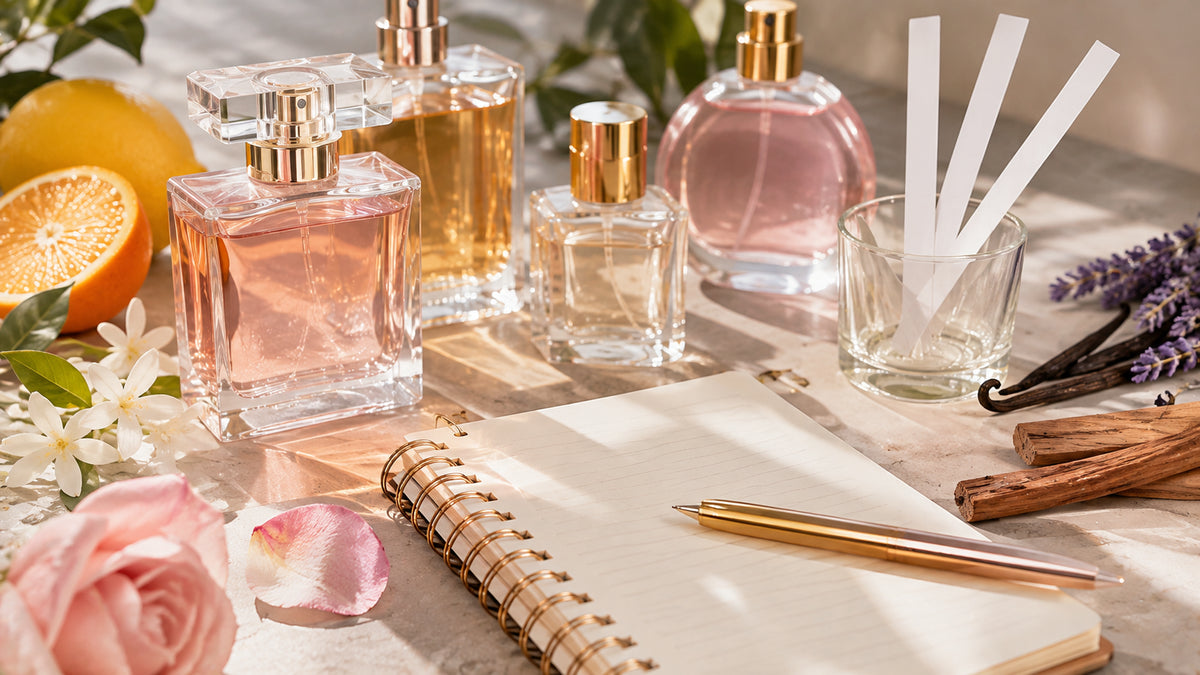
Beauty enthusiasts who buy perfume do so because they want to smell good, thinking on a sensory and personal basis rather than on a technical foundation; they may feel drawn to a memory, a specific mood, or simply to an essence that suits them in their everyday routine. The role of a perfume sales agent is to be able to translate the knowledge they have about that fragrance into useful information to guide and help their target market choose a new perfume with confidence.
Perfume product knowledge for sellers goes beyond memorizing every ingredient in a fragrance, and it is not necessary to tell your buyer about each and every one of the ingredients to give them a useful recommendation; understanding the formats, structures, and performance of perfumes is enough. If you ask the right questions, you already provide them with a basic foundation for your consultations, descriptions of your products, and follow-ups with your clients.
Understanding Fragrance Structure, Base Notes, Middle Notes, and Performance
Frequently, perfumes are described with three layers of notes, and these layers overlap as the fragrance develops after the first smell: they do not necessarily appear in a fixed sequence.
-
Top notes: It is the opening impression, they frequently have citrus notes, slightly herbal or greenish notes.
-
Middle or heart notes: They are the central protagonists of your fragrance; these can include floral, spicy, or aromatic tones.
-
Base notes: They are the base that becomes more distinguishable when the lighter notes begin to fade; they usually consist of woody notes, musk, amber, and vanilla.
For example, we can say that a fragrance can have an opening with bright citrus notes and then its floral middle notes develop and land with a soft woody base. You should encourage your clients to experience this whole development instead of deciding after a first spray.
Three terms that will help you explain how a perfume is worn.
|
Term |
What it describes |
|
Longevity |
How long the fragrance remains detectable |
|
Projection |
How far the fragrance radiates from the wearer |
|
Sillage |
The aroma trail left as the wearer moves |
If you understand all these concepts as a perfume seller, you'll have a field advantage and benefit from it when recommending new scents to your consumers.
A perfume can last quite a while as long as it stays close to the skin, but having strong projection is not the same as lasting a long time; those are different qualities, and you should ask your client which of these interests them more.
Eau de Parfum, Toilette, and Cologne: Perfume Concentrations and Formats
Concentration describes the proportion of fragrance material in its formula; commonly, the labels include the terms: Parfum or Extrait, Eau de Parfum, Eau de Toilette, and Eau de Cologne.
These labels offer a starting point, but they will not guarantee a particular level of strength or wear time; the composition, the application, and the conditions of individual use will also affect the perfume's performance.
|
Type or format |
How to explain it to customers |
|
Parfum or extrait |
Generally more concentrated; assess its actual projection and character through testing |
|
Eau de parfum |
A common choice for customers exploring a fuller fragrance experience |
|
Eau de toilette |
Often presented as a lighter interpretation, although performance varies |
|
Eau de cologne |
Often associated with refreshing, citrus-led compositions |
|
Body lotion or splash |
Typically intended for lighter application and refreshing throughout the day |
|
Oil or solid perfume |
Offers targeted application and often a more intimate scent experience |
Alcohol is often a carrier ingredient of spray perfumes. It helps distribute your scent once sprayed. Wait for the first spray to dry before testing it on a blotter or skin.
There are also different concentrations of the same scent that, at the same time, have different compositions; let your clients compare them instead of assuming that one is simply a stronger version of the other.
Also avoid making promises like "This one will definitely last you a whole day"; a more useful explanation would be "Let's see how it develops on you when you wear it and if its strength feels comfortable to you".
Fragrance Families: Why Do they Matter when Buying Your Own Perfume?
Understanding fragrance families will help your buyers describe to you what it is that they enjoy and discover new scents they may like without the need for technical language.
-
Fresh: Citrus, green, aromatic, or aquatic impressions that feel bright and crisp.
-
Floral: Flower-led scents ranging from delicate and powdery to rich and expressive.
-
Amber: Warm compositions featuring combinations of resins, spices, vanilla, or incense.
-
Woody: Scents built around impressions such as cedar, sandalwood, vetiver, or oud.
-
Gourmand: Fragrances that evoke foods or desserts through notes such as coffee, caramel, chocolate, or vanilla.
Many perfumes combine different families; a woody floral or a fresh gourmand can help your clients explore something new while still keeping a familiar element. Ask simple questions like: "Do you prefer something fresh, floral, warm, woody, or sweet?" Be the guide of the conversation with the information they provided you about their tastes instead of basing yourself on gender labels.
Natural and Synthetic Ingredients
Your clients could ask you if your perfume is natural or synthetic, or maybe even a combination of both. If that happens, you can explain to them the distinctions without implying that either of these two categories automatically means a higher quality. Natural materials can come from sources like flowers, leaves, wood, and resins, and synthetic aromatic materials could recreate an impression of a familiar scent. They can also be used to create smells or effects that would be difficult to obtain from natural sources.
Both contribute to the perfume's character, and its price and performance depend on the complexity of the whole formula, where the sources were gathered, its production methods, and, obviously, the presentation. You can use product information that has been previously researched and documented when talking about environmental claims or ingredients. You should also avoid describing fragrances as gentler, safer, or even more sustainable for the environment just because they contain natural elements.
An example of a clear and consistent answer for your client could be something like: "Well, both natural and synthetic ingredients and fragrances have their own role in the perfume world, but what truly matters is if you like how the fragrance smells on you."
A Practical Fragrance Consultation
1. Identify the Customer’s Needs
Having a brief conversation can help narrow your customers' selections before testing;
-
“Where will you wear this most often?”
-
“Do you prefer a noticeable scent or something that stays close?”
-
“Which scents have you enjoyed or disliked before?”
-
“What price range would you like to explore?”
-
“Are you replacing an everyday favorite or looking for something different?”
Note any specific clue your clients give you; maybe someone who likes vanilla might prefer a drier and woody interpretation instead of a sweeter and dessert-like essence, and someone looking for something fresh may not like pronounced citrus notes. Use all the information you can from the consumer and implement it into your selling strategy.
2. Present a Small Selection
Start offering two or three choices that solve your client's needs. Give simple and easy-to-understand reasoning behind each suggestion. For example: "This one has the soft, floral note you mentioned, and this alternative has a warmer, woodier finish."
Provide options when the direction they provide you becomes specific to what they want; the narrower your selection is, the easier it will be to compare your options and keep your consultation brief.
3. Test on Blotters, Then Skin
Apply testers to strip blotters for your initial comparisons. Wait for the first spray to dry; when your client narrows it down to one or two, ask if you can spray them on the skin. Allow fragrance to dry without rushing it; allow it to develop. Keep track of what essences you've applied so your comparisons are straightforward. If your client can't differentiate between fragrances, stop the testing and give their sense of smell a rest away from the area you applied the essences.
Don't overwhelm your client by continuing to offer more choices. Once you have samples available, have your clients apply one of their favorites during their normal day-to-day activities prior to purchasing the bottle.
4. Help the Customer Decide
Ask your client what they have liked, what things they would change, and if that fragrance fits the occasion they described to you.
Some useful questions can be:
-
“Which one feels most comfortable to wear?”
-
“Do you prefer the fresh opening or the warmer finish?”
-
“Would you like a sample, or do you feel ready to choose?”
Give your customer time to decide; a clear recommendation is useful, but pressure can make their experience less positive.
Describing Scents in Everyday Language
Translate the fragrance notes for them into impressions that are recognizable; instead of giving them a list of ingredients without context, explain how they would work together.
For example:
-
“The citrus gives this a bright opening, while the woods soften the finish.”
-
“This is a gentle floral with a powdery feel.”
-
“The vanilla is warm and creamy rather than intensely sugary.”
Another tactic that can work wonders is sensorial association: clean linen, a forest after the rain, a gently spiced cake. Keep explanations concise and tailor-made for the person you're selling to. A fragrance lover will probably enjoy sniffing with you about the details, but a more pragmatic customer might prefer straight answers to what the perfume smells like and how to wear it.
Only mention the perfumer's inspiration or the product's origin when that information is indeed documented, and keep your own imagery clearly framed as a personal impression. You can leave the vast majority of the technical aspects out of your first recommendation. Begin with 'the scent's personality and how it matches the customer's tastes.
Recommending Perfume for Different Occasions
Use different occasions to guide the conversation, but leave room for the client's individual tastes.
Work and shared spaces: Focus on comfortable projection and appropriate application; a concentration label will not be enough on its own to let the buyer know if the fragrance will feel discreet.
Evenings and social events: Explore richer woods, amber, spices, or gourmand notes if the customer asks about attracting the opposite sex; explain that scent taste is something personal, but confirm how noticeable they want the fragrance to be.
Special occasions: Help the customer choose something they enjoy wearing over several hours. Encourage testing before the event, particularly if they are trying an unfamiliar style.
Gifts: Ask about the recipient’s existing preferences. When those are unknown, a discovery set, sample selection, or gift card may offer more flexibility than choosing a full bottle. Explain the exchange policy before purchase.
For clients who want several perfumes, suggest different roles depending on their lifestyles, for example: something fresh for daytime use and something warmer for nighttime. Additional purchases beyond that should have a specific preference/reason.
Advertising a New Perfume
There are three main points you need to consider when promoting a new perfume: its character, a unique feature, and the target audience that might be interested in it.
A short introduction might be:
“This new fragrance combines a creamy gourmand character with a dry woody finish. It could appeal to you if you enjoy warm scents but prefer less sweetness. Would you like to try it?”
If the customer is unfamiliar with the brand, briefly explain its fragrance style and how this release fits their preferences. When you have them available, offer samples or smaller bottles, and also record any feedback from clients that may be useful; this will help the team refine their descriptions and identify who is most likely to enjoy that fragrance.
Supporting Custom Fragrance Experiences For Special Occasions
If you provide custom blending service in your retail store, lead them through your established service instead of letting them loose to just experiment freely.
Begin by narrowing down their desired direction. Then look through the essential oils or blended accords that are part of your service. Note the formula they choose so you can show them again or recreate it in the future. Keep notes on the batch for quality control purposes.
Adhere to your service's protocol for formulating and processing the blend. Communicate any needed resting period (letting them know that allowing for maceration can enhance the quality, which usually ranges from about 2-6 weeks), storage guidelines, and performance expectations with directives that pertain to that specific blend.
Designing and testing custom fragrances can result in 2-4 months from concept to first sale.
Presentation, Storage, and Customer Comfort
A well-maintained fragrance counter supports a better testing experience.
-
Keep testers clean, functional, and properly labeled.
-
Display prices, sizes, and concentrations where customers can find them.
-
Store products according to their instructions, away from excessive heat and direct sunlight.
-
Keep counters uncluttered and avoid competing ambient scents.
-
Make gift wrapping and other presentation options clear.
NEVER apply any fragrance to a customer without asking first. If a customer notifies you that they are experiencing sensitivity or discomfort, discontinue testing and refrain from making claims about what the customer should or shouldn't wear. Refer to known product information rather than guessing or making conclusions about potency or where the fragrance ingredients are derived from.
Be respectful of individual tolerance levels regarding subtlety, intensity, and personal space.
Building Long-Term Customer Relationships
With the customer’s permission, record useful details such as favorite fragrances, preferred scent families, and purchases. These notes can help your perfume business provide more relevant recommendations in the future.
Follow-up should have a specific purpose: a requested stock refill, a suitable new release, or an invitation to an event the customer may enjoy. Use their preferred contact method and respect their communication choices.
A brief message can be enough:
“A new woody vanilla fragrance has arrived that reminded me of the warmer scents you enjoyed. You’re welcome to stop by for a sample.”
FAQ
Does a stronger perfume mean better quality?
No. Strength is just one attribute of a scent. A mild perfume could be masterfully blended and may simply be more aligned with the customer’s tastes.
How should I discuss premium pricing and different price points?
Describe the personality, presentation, volume, and packaging that each option brings to the table. Remember to stay neutral and never imply that because something is lower in price, it’s not worth considering.
What if a customer dislikes every option?
Go back to the brief. Find out what about each option made it too sweet/fruity/spicy/heavy/familiar, etc., for them. Work from there, or suggest picking up where you left off another day.


