



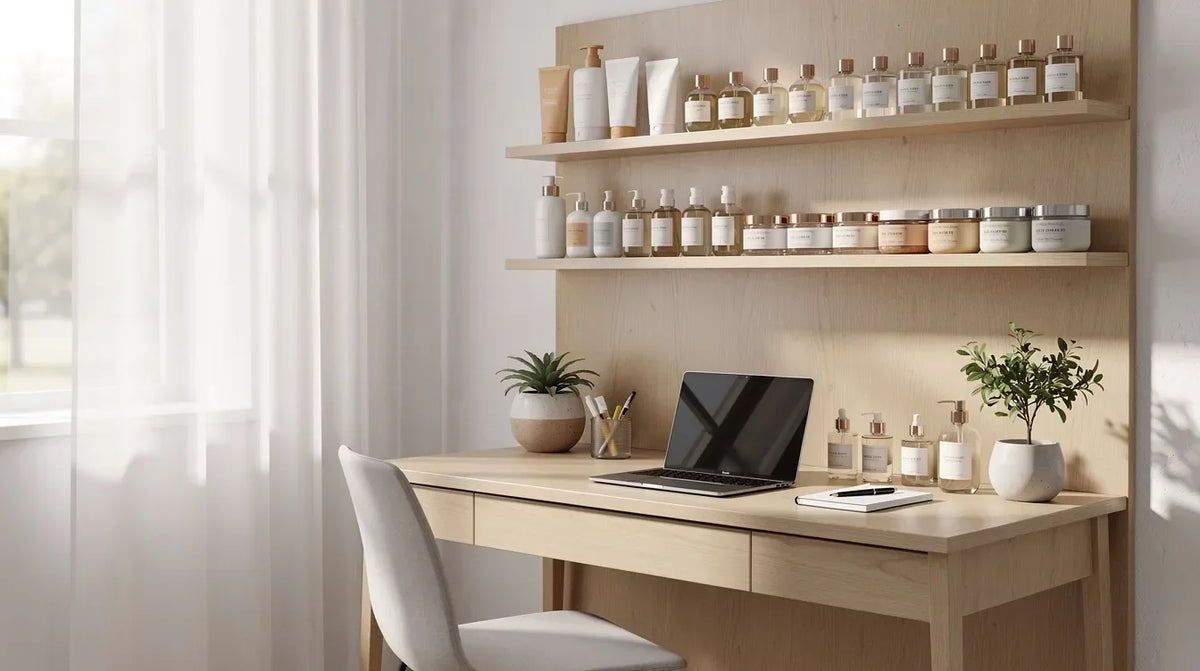
Getting started with a home-based beauty business in 2026 is actually a whole lot easier than you might think. With affordable equipment making it possible to create or resell your own beauty products, a whole lot can be achieved online. But success really comes down to choosing what kind of products you're going to focus on, being careful with your planning, making sure you're following the rules, and listening to what your customers are telling you they want.
- The profit potential: If you get your pricing, packaging, and marketing right, you could be looking at profit margins of 60 to 80% on products like serums, face masks, makeup cleansers, or niche fragrances.
- Make sure you follow the rules: Understand what the FDA is saying about what you can and can't do in the States and local labeling requirements. If you don't comply, you could be facing fines, product seizures, recalls, or even losing your business altogether.
- Build some visibility: Using social media, partnering with influencers, and running some paid ads can help turn a small home beauty business into a real brand.
- Start small: Launching with 3 to 10 focused products, simple branding, and a basic website is a good way to begin.
- Scale up by being smart: Use sales data and customer feedback to figure out which products and marketing channels to expand on.
Why Sell Beauty Products From Home in 2026?
The at-home beauty business has really taken off since 2020, with TikTok-born skincare brands, home-based lash and lash brow lines, and indie fragrance creators showing us that you don't have to have a factory or a retail lease to build a cosmetics business.
Selling beauty products from home lets you get started with very little upfront cost, work the hours you want, and has the potential to turn into a full-time income. You get to control what products you sell, what's in them, when you work, and what your brand story says, all of which you can share with customers using e-commerce and social media.
By 2027, the global beauty market is expected to reach $700 billion dollars, and e-commerce is still growing rapidly. Indie beauty brands are also starting to make a name for themselves, and this is opening up opportunities for smaller sellers.
This guide covers the key steps you need to take: working out what kind of business you want to run, choosing the right products, figuring out how much profit you can make, understanding FDA regulations, building a brand, setting up an online store, marketing your products, and improving your business using customer feedback and sales data.
Decide What Kind of Beauty Business You Want to Run

Your business model is really going to affect how much money you need to get started, what equipment you need, how much you'll need to spend on shipping, and what margins you'll be working with. So before you go out and buy any ingredients or stock, figure out which approach fits your budget, skills, and available time.
- Making your own cosmetics: If you want to make your own products, you'll have more control over the formulas, but you'll also need to spend more time and effort on testing, documentation, and making sure you're complying with the regulations. You can also expect to make a gross margin of 65 to 80% on products like skincare, soaps, and body products.
- Private label or white label: A manufacturer makes the products for you, and you sell them under your own brand. White-label orders can start as low as 100 to 500 units, while custom formulations can require several thousand. This can be a faster way to get started and reduces the risk of getting a new formula wrong, but it will usually require more capital upfront.
- Reselling branded products: Buy from authorized wholesalers and sell established beauty brands. This gives you immediate brand recognition, but you can expect lower margins of 30 to 50%.
- Dropshipping: A supplier ships the products directly to the customers, which reduces your inventory costs, but you have less control over product quality, packaging, and shipping, and the margins are usually lower than the other models.
Think about how much money and time you have, whether you're comfortable with production and compliance, whether you prioritize having more control over the formulas or getting the products to market quickly, and whether the products you're selling align with your personal interests and beauty inspiration.
Choose the Right Beauty Products to Sell From Home
Choosing the right products is more important than having a big catalog when you first start out. Focusing on 3 to 10 strong products can be easier to manage and market than dozens of unrelated products.
Some of the most popular categories for a home-based beauty line include:
- Skincare: serums, face oils, clay masks, hydrating masks, and vitamin C treatments are all in growing demand.
- Haircare: scalp oils, leave-in conditioners, hair growth oils, and products for textured hair are also popular.
- Makeup: lip oils, glosses, neutral palettes, and minimalist cosmetics are also things you can sell from home.
- Nail care: press-on nails, cuticle oils, and nail treatments are also popular.
- Niche fragrances: solid perfumes, oil rollers, fragrance layering oils, and body sprays are also in high demand.
Recent beauty trends include ingredient transparency, skin barrier care, fragrance layering, and textured hair products. Choose products that match your skills and available space and that you're interested in. Remember that products like balms, soaps, and essential oil-based serums are easier to produce at home than more complex products like SPF creams or retinol treatments.
Starting with 3 to 10 products in one niche, like acne-friendly skincare for teens or protective styles haircare, will keep inventory, compliance, and marketing manageable.
Understand Laws, Safety Rules, and Labeling Requirements
Compliance is essential when selling beauty products from home. If you mislabel a product or make a claim that isn't supported, you could be facing penalties, recalls, or other enforcement action.
In the States, cosmetics are regulated under the Federal Food, Drug, and Cosmetic Act and the Modernization of Cosmetics Regulation Act of 2022 (MoCRA). Depending on the business and the products you sell, requirements can include: brand registry, facility registration, listing your products, substantiating the safety, and reporting serious adverse events. It's also really crucial to distinguish cosmetics from drugs. Cosmetics that moisturize are generally not the same as products that are marketed to treat eczema or what have you. These may actually fall under drug regulations.
Beauty product labels need a few essential things:
- An ingredient list using those right INCI names we're supposed to use,
- The net weight or volume of the product,
- A clear product identity
- Your name and address,
- Batch or lot information to help with tracing,
- Any required warnings,
- Shelf Life/expiration date where that's relevant
Note that it's all different in the EU/UK, Canada, Australia, and some other places, so the nice folks running the business should probably take a look at the official government guidance for their target market. For anyone selling in the US, the FDA's small business and homemade cosmetics resources are a good place to start.
Plan Your Home Workspace, Equipment, and Storage
Having a dedicated workspace set aside for your home beauty business can help keep things organised and safer. Try to keep production, packing, and inventory areas separate if you can, and keep food and kids out of the mix; you don't want to risk contamination or accidents.
Basic equipment you might need can include:
|
Equipment |
Purpose |
Approx. Cost |
|
Digital scale (0.1g precision) |
Measuring ingredients accurately |
$20, $50 |
|
Stick blender/immersion mixer |
Emulsifying creams and lotions |
$25, $40 |
|
Stainless steel bowls & beakers |
Mixing and heating |
$15, $30 |
|
Thermometer |
Monitoring melting and cooling temps |
$10, $20 |
|
pH meter or strips |
Testing water-based formulas |
$15, $50 |
|
Label printer |
Printing compliant product labels |
$60, $150 |
|
Basic shelving and bins |
Organized storage |
$30, $80 |
You'll also need to keep your ingredients and sensitive products in a spot that's safe from heat, light, and contamination. Some products need special storage and shipping precautions too.
Keep production logs from day one; that way you can keep track of what you made, when it was made, what went in it, and all that jazz. Good documentation makes future scaling a whole lot easier.


Source Ingredients, Packaging, and Beauty Brands to Resell
Finding reliable suppliers is a proper headache in the beauty industry. You don't want to be stuck with bad or variable quality ingredients that are going to affect every batch you do, making it harder to ensure products meet customer expectations.
When buying ingredients, try to find suppliers that can give you cosmetic-grade stuff and the documentation to prove it. That means things like Certificates of Analysis (COAs), Safety Data Sheets, INCI information, and all that.
Packaging is a big deal too; it can affect the stability, cost, and shipping of your cosmetic products, so you should think about what will work best for you. It will also make it easier to ship orders efficiently.
For resell businesses, stick with the authorized wholesalers and distributors; don't get your inventory from the grey market. That stuff may be dodgy or expired.
Test out your suppliers with small orders first and see how they stack up; consistency, communication, shipping speed, and packaging all matter.
Calculate Costs, Pricing, and Profit Margins
Profit margins are the amount left over after product costs, but net margins also factor in other costs like marketing, shipping, platform fees, and labour.
Example: Let's say you make a 50ml face cream
|
Cost Component |
Amount |
|
Raw ingredients (butters, oils, emulsifiers, preservatives) |
$3.50 |
|
Packaging (jar, lid, box, label) |
$2.50 |
|
Shipping supplies (mailer, padding) |
$1.00 |
|
Labor (0.25 hr at $15/hr) |
$3.75 |
|
Overhead (utilities, equipment depreciation) |
$0.75 |
|
Total product cost |
$11.50 |
If you want to sell that product for a 70% gross margin, you'd need to sell it for about $38.50. Note that actual margins vary all over the place depending on category, product, sourcing, and pricing strategy.
Don't forget about other costs like transaction fees, e-commerce subscriptions, advertising, and free shipping offers. Those all add up and can eat into your profits.
Premium pricing can work if you've got the right products and story to back it up. Mid-range pricing is all about striking a balance between price and margin, while budget pricing usually means you're going to need to sell a whole lot more.
Create Your Brand Identity and Packaging Design
You need to look like a proper business, even if you're making your products at home. Your brand identity should tell people what makes you different.
Focus on:
- brand name: something that is memorable, easy to spell, and relevant to your niche
- tagline: a concise expression of what your brand is all about
- visual identity: stick to a consistent colour palette and typography
- tone of voice: match your style to your target audience
Your brand story should explain why you started, what problem your products address, and what values guide your business, like sustainability, cruelty-free sourcing, or ingredient transparency.
Your labels should be easy to read and have a nice design that combines the required product information with an attractive look. Good product photography is also important for building trust online.
Little touches like branded tissue paper, thank you cards, QR codes, or product samples can make your orders feel more professional.


Ecommerce Basics: Setting Up Your Online Store and Sales Channels
First, get your online store sorted out, and then you can think about where else to sell your products. A simple online shop is a must-have if you want to sell beauty products online. Some of the most common options come in the form of building your own e-commerce store, social media platforms, and online marketplaces.
Having your own website gives you the freedom to control how your brand looks, the customer experience, and your sales process, while marketplaces can get your products in front of a wider audience. Of course, platforms like Amazon might have specific product rules and requirements you need to follow in order to sell in their beauty category.
If you want to run a successful beauty store online, you'll want to include:
- A mobile-friendly homepage that showcases your best products and looks great with strong visuals
- Navigation that's clear & easy to use by product category
- Product pages with photos, ingredients, instructions, and a bunch of extra details
- An About page that tells the story of your brand
- A page with all the FAQs, shipping, returns, possible additional costs, and privacy details that people need to know
Make sure to offer payment methods that are convenient & secure, display customer reviews, and SEO optimise your product pages based on Google Trends to make them easy to find on search engines.
Write High-Converting Product Descriptions
Beauty shoppers can't touch or smell your products before buying, so your product descriptions need to paint a clear picture and make people feel confident in their purchase.
Try to follow a simple structure like this:
- Identify the problem: what's the customer trying to solve or achieve
- Tell them the solution: how your product helps to solve that problem
- Highlight the key ingredients, the good stuff that does the work
- Give them instructions: how to use the product and what to expect
- Set the right expectations: what results they can realistically expect and when
Be transparent about ingredients, texture, scent, and skin-type compatibility, and avoid making any claims that aren't backed up by science.
Adding product videos that show how it works, what it feels like, and how to use it can really help customers feel more confident in their purchase. And if you can suggest how different products can be paired together to create a good routine, that's a bonus.
Marketing Strategies to Get Your First 100 Customers
To get your business off the ground, focus on just one or two marketing channels at a time, rather than trying to be everywhere at once.
Organic social media marketing is a great way to go because beauty products are so visually appealing; share tutorials, ingredient stories, before-and-after pics, and behind-the-scenes content to get people engaged.
Paid ads can help you reach a wider audience a lot faster; just be sure to start small, choose a single product to focus on, and keep an eye on how well each ad is performing before you spend any more cash.
Micro-influencers can be super useful for reaching people who are really into skincare, haircare, or makeup products; they can help you get your products in front of a targeted audience without breaking the bank.
And email marketing can give you a direct line to your customers. When you've got a good list going, you can share all sorts of useful info like tutorials, new product releases, and special deals.
Don't forget the power of user-generated content and customer reviews; they can provide a ton of social proof to help sell products and build trust with new customers.


Handle Production, Shipping, and Returns From Home
Setting up a repeatable system for handling orders can make all the difference when it comes to getting packages out the door. Here's a basic order workflow you can follow:
- Get the order from the customer
- Pick the products from your finished inventory
- Pack up the items safely
- Print the shipping label
- Arrange for the carrier to come pick up the package or drop it off at the post office.
Make sure to use protection for your products, seal them up right so they don't leak, and if you've got products that are sensitive to heat, you'll want to take special care to keep them cool.
And don't forget to create clear return and exchange policies, so if things don't work out, you've got some rules in place to make it easy for customers to get their money back.
Use Data to Improve Your Home Beauty Business
A simple spreadsheet can be a powerful tool for helping you understand what's working and what's not in your business. Here are some numbers you should be tracking:
- Total sales by product and channel
- Which products are flying off the shelves and which ones are struggling
- Average order value
- How much it costs to get each new customer
- How often your customers come back to buy from you again
And don't forget to listen to customer feedback; if people are complaining about the same thing over and over, it's probably something you need to fix.
Try out different product photos, headlines, email subject lines, or pricing approaches and compare the results. Look at your numbers every month to see which products you should be keeping or ditching.
Useful Resources and Support for New Entrepreneurs
Just because you're running your business from home doesn't mean you're on your own; there are loads of resources out there to help you get started.
- Official regulatory websites like the FDA or equivalent agencies in your target market
- Small business organizations like development centers, chambers of commerce, and local authorities can help with all the boring stuff like licensing, taxes, and permits
- Online communities like indie beauty or formulation groups can be a great place to get advice and learn from others who are in the same boat
- Online courses and webinars on things like formulation, good manufacturing practices, branding, and digital marketing can help you fill in any knowledge gaps you have
Don't get all your advice from random social media posts; keep a list of reliable sources for safety and legal info.
Common Mistakes When Selling Beauty Products From Home (and How to Avoid Them)
Making a few common mistakes can save you time, money, and a lot of headaches. Here are some pitfalls to watch out for:
Product and strategy mistakes:
- Trying to launch too many products at once → start with a small, focused range of products and see how they do
- Underpricing → make sure you factor in all the costs, including labor, fees, shipping, marketing, and overhead, when deciding how much to charge for your products
- Ignore regulations for once and simply follow the official requirements from day one.
- Using sub-standard photography or product copy that's more like an afterthought → actually invest in some clear, benefit-focused content that genuinely showcases the product and how it'll make a customer's life better.
Operational mistakes that will sink you:
- Failing to keep tabs on batches of product → just keep proper production and inventory records; it's not rocket science.
- Shipping out orders with no clear plan in place → sort out a repeatable fulfillment routine; you don't want to be flailing around like a headless chicken every time you get a new order.
- Not even thinking about seasonal demand → think ahead a bit and plan your inventory and staffing around the times of year when sales are going to be crazy busy.
The key isn't to be completely flawless by the time the business gets going, but to spot problems early on and keep improving systems as the business grows.
Turning Your Home Hobby into a Thriving Beauty Brand
Starting to build a home-based beauty business off the ground really starts with choosing a focused product niche, setting up a sensible business model, getting the regulatory side of things sorted, building a solid brand identity, and getting a simple online store up and running. You don't need a million dollars in the bank or years of experience to get going, just a clear plan and a willingness to roll up your sleeves.
The thing that counts most isn't having a spotless launch; it's getting high-quality products, making sure customers have a good experience, keeping your marketing consistent, and keeping on improving all the time. Also, your first product or marketing push is probably going to need some tweaking, and what your customers think about it is going to be super useful in helping you make those changes.
Set yourself a realistic 60-90 day deadline from planning to getting your first sales under your belt, then regularly review how things are going. Building trust with customers is key to getting them to stick around and support your business as it grows.
Start with a clear niche and a smallish range of products to begin with, then scale up based on what your customers actually want to buy, what your sales data is telling you, and all the things you learn along the way.
FAQ
Do I need a specific license to sell cosmetics from my home?
Usually, no specific cosmetics license is needed. However, you may require a business licence, home business permit, or tax registration. You must also follow cosmetic safety, labelling, and local zoning regulations.
Can I start with homemade products, or should I use private label and wholesale only?
Both options work. Homemade products offer more control and higher margins, while private label and wholesale allow a faster launch. Whichever route you choose, products must meet all safety, hygiene, and labelling requirements.
How much money do I realistically need to start selling beauty products from home?
A basic private label or resale business can start with around $300 to $500. Homemade skincare product brands often require $1,000 to $2,000 for ingredients, packaging, equipment, and marketing. Starting small and reinvesting profits helps manage costs.
Can I ship beauty products internationally from home?
Yes, but some products face shipping restrictions, especially perfumes and aerosols. Check carrier rules, customs requirements, and destination-country regulations. Many online sellers start domestically before expanding internationally due to high shipping rates.
How do I build trust if I'm just selling beauty products from my living room?
Focus on transparency and professionalism. Share your process, provide clear product information, showcase reviews and results, and respond quickly to customers. Strong communication and a polished experience can build trust just as effectively as a larger brand.


