



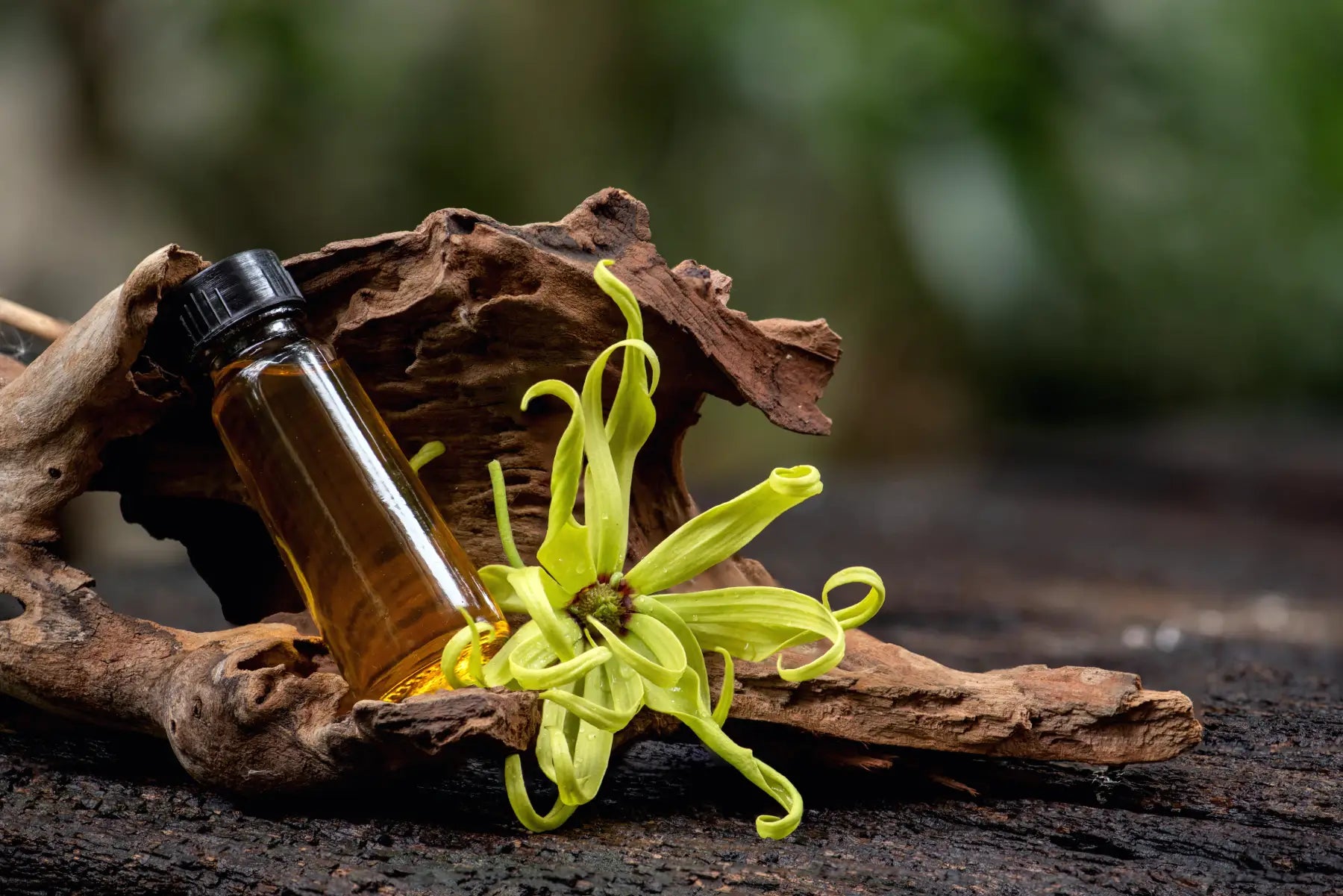
Have you ever caught a whiff of something that just transported you to a cozier, more indulgent place? That's the magic of ylang ylang for you.
It pops up in perfumes, skincare, and body products, where it's often called the "Queen of Perfumes" for its crazy complex and exotic scent.
It's a main player in around 40% of all high-end perfumes out there, and shows up in all sorts of floral and oriental scents. We can see why Ylang ylang is often described as having a slightly medicinal quality when smelled neat, and it's a staple in high-end scent compositions because it reeks of luxury.
But here's the thing, ylang ylang doesn't just smell like one thing. It's layered, evocative, and a little bit surprising, which is exactly why it's been a fave for centuries.
Its starring role in all sorts of famous perfumes has cemented its status as a total vital component in luxury fragrances. And there's a whole lot of respect for traditional perfumery practices; keeping the classic formula just right is key to making sure those iconic scents stay iconic.
Plus, it was originally known as the "poor man's jasmine", basically an affordable alternative to the real deal, with its own special fragrance.
Introduction to Ylang Ylang
Ylang ylang is basically the world's most beloved fragrance; people have been obsessed with it for centuries for its rich, floral, and instantly soothing aroma. It's from the lush tropics of Malaysia, the Philippines, and Indonesia, and has been a total staple in perfumery for ages, being prized for its one-of-a-kind ability to capture both intensity and warmth in one single scent.
Getting the essential oil out of ylang ylang flowers is no easy task, but steam distillation is the trick; it basically gently coaxes out the scent and keeps its full-bodied, velvety character intact.
What does ylang ylang actually smell like?
Ylang ylang's rich, sweet, and floral, with a creamy, tropical warmth that'll transport you to a different place. It's got lush floral notes mixed in with hints of banana, honey, and soft, buttery richness.
People sometimes compare it to jasmine, but it's got a unique twist. Ylang ylang has a powdery scent that contributes to its warm and gentle fragrance; it also has subtle spicy undertones that may be compared to clove or cinnamon.
On your skin, it smells totally different, and gets even better with a bit of time, bright and floral at first, then settling into something milder and silkier. In perfumes, it's often the heart note, distinctive and romantic, versatile enough to suit whatever mood you're in.
Is Ylang Ylang a Sweet, Floral, Creamy or Rich fragrance note?
The simple answer is yes to all three, but how it all shows up depends on the blend and how it reacts with your skin. Dermal chemistry, concentration, and formulation all play a part.
The sweetness in ylang ylang isn't sugary at all; it's soft and rounded, like ripening fruit or floral nectar, which is why it feels so inviting rather than overpowering.
The floral side puts it near notes like jasmine and tuberose, but it tends to feel more relaxed than sharp. And the creamy quality is what really sets it apart; that buttery warmth gives ylang ylang its signature depth and makes it feel luxurious, especially in everyday perfumes and body products.
What does ylang ylang smell like compared to other things?
People often compare ylang ylang to other familiar scents, but no single comparison really does it justice. Similarities can be helpful, but the note remains pretty unique.
It shares floral DNA with jasmine, though it can feel greener or sharper. Some people pick up on a subtle banana-like nuance, like the scent of ripe tropical fruit. In certain blends, it can echo vanilla's softness without its dessert sweetness.
One thing ylang ylang doesn't smell like is clean laundry, citrus, or powdery soap, expect warmth and presence, not crisp or minimal.
Where does Ylang Ylang come from, and why does it matter
Ylang ylang comes from the flowers of the Cananga tree; it's native to tropical regions, and climate has a huge impact on its scent, with warmth, humidity, and rich soil all playing a part in making its lush aroma so special.
Historically, ylang ylang's been linked to self-care and personal care; it was valued for its scent, but also for how it made people feel. That emotional connection still influences how it's used today.
Understanding where it comes from explains why ylang ylang feels alive and expressive, rather than flat.
Is ylang ylang feminine or masculine?
People often ask this question, mainly because florals used to be marketed as feminine. Ylang ylang totally throws a wrench in that idea; it's especially popular among women for its romantic and sophisticated qualities, but it's not just for women.
It's best to think of ylang ylang as gender-neutral; it's all about how it's blended and how you wear it, not some label.
Why is ylang ylang used in perfumes, skincare, and beauty
Ylang ylang is versatile in application, and its use is influenced by its distillation grade. In fragrance, ylang ylang acts as a kind of "glue" that smooths out rough edges, adds depth and fullness, and makes blends feel like they belong together rather than feeling disjointed.
Ylang ylang essential oils are used all over the place in Skincare and Aromatherapy. When you add its scent to your beauty routine, it gives an almost comforting sensation, like you're treating yourself to a little bit of indulgence.
It helps even out your skin's oil production, makes your hair look shiny, and has a calming, uplifting effect. In aromatherapy, Ylang ylang essential oils may soothe stress and blood pressure, improve mood, and promote relaxation, and it's said to have benefits that go all the way to the nervous system and stress-related symptoms.
How ylang ylang fits into the daily beauty routine
Actually, ylang ylang is great in everyday life, not just for special occasions. Its versatility makes it easy to work with.
In the summer, it really comes alive with the heat of your body and feels just radiant. In the cooler months, its warmth feels like a cozy hug.
It can be used to calm you down or make you feel put together, either way. Lots of people love ylang ylang because it's a scent that doesn't shout; it just kind of lingers in the background and becomes a part of who you are.
Want to get a feel for how great it is? Try out ylang ylang products or fragrances for yourself.
Fragrance pairings: what goes well with ylang ylang?
Perfumers love ylang ylang because it's so easy to pair with other scents, creating a rich, exotic fragrance that's just begging to be snuggled up with.
It looks great with amber, jasmine, orange blossom, or even a little bit of grapefruit, and each combination reveals a new side of its sophisticated scent.
French perfumes often pair it up with rose or jasmine for a super-feminine look.
It's pretty amazing how easily it adapts to be the centre of a floral scent or just a supporting player that lifts the other notes, it's a real chameleon!
And beyond that, people also really value its ability to calm you down and boost your mood; that's why it's so popular with perfumers all over the world.
Frequently asked questions about ylang ylang
Is ylang ylang overpowering?
Now, it's true that if you use too much of it, it can start to feel intense, but when it's blended well, it's actually just smooth and balanced.
Does ylang ylang last long on the skin?
Oh yes. Its velvety texture helps it just linger and linger, especially when it's got some nice warm base notes to work with.
Can ylang ylang be worn year-round?
Absolutely. In the summer, its tropical warmth is just the thing to make you feel like a tropical island, and in the cooler months, its softness and depth are just what you need to feel all warm and fuzzy inside.
Discover your version of ylang ylang
Here at Zermat, we believe that fragrance and elegance are all about self-expression, not about making a big impression. Ylang ylang is a perfect fit for that philosophy; its warmth and versatility just make it a natural part of who you are.
Made in Mexico, with all the usual high standards, we're all about real people and real routines.
Scent is all about personal taste, and the best way to get a feel for ylang ylang is to try it out for yourself, see how it develops on your skin and in your daily routine. Whether you're all about warmth, softness, or just feeling confident, ylang ylang is a great place to start, and we're here to help you on your journey.


