



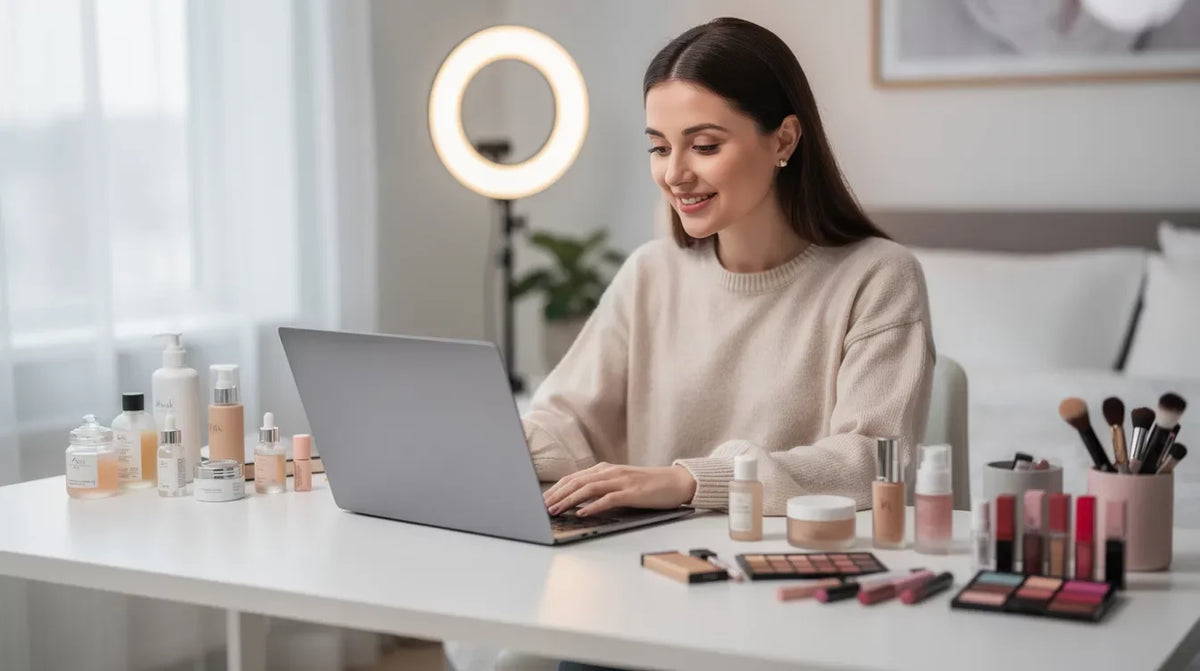
The Beauty Industry Has Grown Like Crazy, But Selecting The Right Program Takes More Than Just Finding The Highest Commission Rate
A successful affiliate strategy depends on more than just a high commission rate. You've also got to consider things like how much people trust the brand, the potential for conversions, whether your audience is going to be genuinely interested in the products, how well you can track everything, and whether people will keep coming back to buy from the program long-term.
This guide will give you the lowdown on an effective beauty affiliate program evaluation before you invest your time and traffic into promoting it.
Key factors to consider include:
- Commission structure
- EPC and average order value (AOV)
- Cookie duration
- How well the product fits into your audience's existing routine
- Brand reputation
- Tracking and support tools
- Compliance requirements
- Whether the program is available in your region
- How much competition there is for that program
A good beauty affiliate program strikes a balance between how much money you can make and how reliable the tracking is, as well as the types of products your audience actually wants to buy.
What Exactly Is A Beauty Affiliate Program (and How Is It Different From A General Affiliate Program)?
Beauty affiliate programs let creators, makeup enthusiasts, bloggers, and influencers earn commissions from referred sales whenever someone buys something through their links or storefronts.
They differ from general affiliate programs because beauty markets tend to rely more heavily on:
- Tutorials and before-and-after pics
- Ingredient explanations
- Shampoo and makeup routines
- Personal product recs
Trust is crucial in beauty because if you promote low-quality beauty products, your audience will quickly turn on you.
Beauty also has a lot of repeat business potential because products like skincare products and shampoos get used up over time, and customers will keep coming back to buy the same stuff.
A 10-Point Framework For Evaluating Any Beauty Affiliate Program
When comparing beauty affiliate programs, use these 10 criteria:
- Commission rate and structure
- EPC and AOV
- Cookie duration and attribution
- How well the product conversion funnel is set up
- How well the product fits your audience
- Brand trust and reviews
- How good the creative tools and affiliate support are
- Compliance requirements
- Whether the program is available in your region
- How much competition there is for that program
Keep in mind that even if a program has a lower commission rate, it can still outperform one with a higher rate if it has better products, a smoother conversion process, and a higher customer value.
By the way, keep in mind the tightening of regulations such as the FTC guidelines, social platform ad policies, and the upcoming cookie deprecation you'll be facing in 2026.
Zermat’s Customer to Affiliate Progression
Zermat’s affiliate plan is one of the most versatile out there; our participants can start with $0, with no mandatory enrollment fee or monthly purchase, and can easily move on from being regular customers to affiliates quickly and easily.


Commission Rates And Structures: Don't Get Suckered Into Thinking Percentage Alone Matters
Beauty affiliate commissions often range from 5 to 15 %, but that's just the beginning. The actual earning potential of a commission is going to depend on a lot of other factors.
For example, you might have a program with a 15% commission on a $40 order, which would pay $6, but a program with an 8% commission on a $120 order might pay $9.60, and it's the second program you want to promote.
When evaluating a beauty affiliate program, also consider:
- The average order value
- Exclusions
- Discounts that affect commissions
- New customer bonuses
- Performance tiers
Big retailers like big-box stores offer a lot of trust and product variety, while niche brands might offer higher commissions but lower sales volume.
Here's a quick math exercise to show you why looking at the percentage alone is going to mislead you:
- Program A: 15% commission on $40 AOV = $6 earned per sale
- Program B: 8% commission on $120 AOV = $9.60 earned per sale
You want to go with program B, even though the commission percentage is lower. Always do this math before committing to a program.
Common beauty-specific quirks to watch out for: lower commissions on gift cards, exclusions on prestige brands within a retailer's catalog, and reduced rates on discounted or sale items. Beauty Bay, for example, pays 10% on own-brand items but only 1% on electricals and discounted products.
When evaluating an affiliate opportunity, also look at the cost of participation. A program may advertise an attractive commission rate, but mandatory fees, recurring purchases, or minimum volume requirements can significantly change the economics; this is where Zermat stands out, given the $0 entry and the lack of mandatory monthly purchases.
Zermat’s affiliates can get access to other great perks as well, like a 5% quarterly cashback, international trips, access to clubs, group and other special experiences, besides a 20% to 50% personal discount based on purchase volume.
Plus, a tiered performance bonus (non-cumulative) in addition to the affiliate’s sales commission.
Average Order Value (AOV) And Earnings Per Click (EPC) In Beauty
Your AOV and network-reported EPC are going to tell you just how well a beauty affiliate program actually converts traffic. A higher average order value means bigger commissions per transaction, especially true in multi-brand retailers where shoppers build carts.
A program with strong EPC usually has:
- A trusted brand name
- Good product pages
- Clear shipping information
- A smooth checkout process
High-value skincare and anti-aging products can produce strong earnings even with moderate commissions because customers are spending more per order.
Track your own EPC by using UTM-tagged affiliate links across 30-60 days; don't just rely on the affiliate network's dashboard. Your audience may convert very differently from the network average.
Cookie Duration, Attribution, And Cross-Device Tracking
Beauty shoppers often do a lot of research before making a purchase, so cookie duration is a big deal.
Examples:
- Sephora: short cookie window
- Beauty Bay: around 30 days
- Fenty Beauty affiliate program: around 7 days
- Some programs like Ulta Beauty: 30-60 days
Programs with longer cookies are a lot more helpful for blogs, YouTube videos, and evergreen content where buyers may purchase days or weeks later.
Cross-device and cookieless tracking solutions are getting more and more important as browsers start phasing out third-party cookies. Some affiliate platforms now use first-party cookies, server-to-server tracking, and coupon code attribution to keep credit across devices.
Funnel and Conversion Experience: From Affiliate Link to Checkout
The quality of the shopping funnel is way more important than a flashy commission rate. You can send thousands of clicks to a program, but if the product page is sloooow, confusing, or missing key info, you're gonna tank your conversion rate something fierce.
A high commission is absolutely worthless if the shopping experience is a total disaster.
Test out:
- Website speed, don't make me wait for ages to load your page!
- Mobile experience, make sure it looks good on my phone
- Product descriptions, tell me what makes this thing special
- Ingredient information, I want to know what I'm putting on my skin
- Shade matching tools, if I'm buying makeup, I don't want to end up with the wrong shade
- Shipping costs, no surprise fees, please
- Checkout process, make it easy for me to buy!
Strong retailers get an edge from having a huge catalog of products & a well-established buying experience that's easy to navigate.
Weak funnels often look like a slow website, confusing navigation, limited product info, or a super complicated checkout process.


Reputation, Reviews, & Trust Signals in Beauty
Beauty shoppers want to work with global brands that are trusted and have a good rep. In 2026, young consumers rely way more on long-form reviews on YouTube, TikTok demos, and ingredient explainers than on traditional ads. Your credibility is basically tied to the brands you promote.
Research:
- Customer reviews: what do they really think of this product?
- Reddit discussions: see what other people are saying
- YouTube feedback: do they like the product or not?
- Social media comments: get a sense of the community
Look for:
- Transparent ingredients; I want to know what I'm putting on my skin
- Good customer service; I hate dealing with difficult support teams
- Real reviews, not fake ones from the brand itself
- Certifications, like cruelty-free products or dermatologist-approved
- An inclusive beauty brand; Everyone should feel welcome to try the products
- Clinical evidence: does it actually work?
- Evaluate the quality; make sure they are high-quality products
Negative sentiment can really hurt your conversion rates and reputation. Working with affiliates can boost brand visibility & SEO rankings, but only if you're promoting trustworthy brands.
Positive trust signals to look for: dermatologist-developed claims, cruelty-free certifications (Body Shop), transparent ingredient lists with natural ingredients, and clinical study references. User-generated content (UGC) boosts brand trust and authenticity, and affiliates can provide valuable UGC for beauty brands. UGC can also enhance visual marketing for beauty brands, improve SEO rankings, and lead to higher customer engagement rates.
Matching Programs to Your Beauty Niche
Know your audience inside and out to pick the right brands. The beauty niche is not one-size-fits-all.
Match your brand style with the style of the brand you're promoting for seamless promotion. Map your top 10 traffic pages or videos (e.g., "best vitamin C serums" or "drugstore dupes") to affiliate programs that actually stock those products. When the product-audience match is spot on, tailored marketing campaigns to promote items by affiliates can really boost sales.
Programs featuring stuff you can buy again and again (like effective skincare or hair growth treatments) can get you repeat customers and steady passive revenue. One-off makeup purchases may convert once but rarely again.
Affiliate Network, Tracking Tools, and Creator Support
The underlying affiliate network or affiliate platform, or in-house, affects tracking stability, reporting quality, and payout reliability. Effective affiliate programs provide competitive earnings and transparent tracking.
Common networks include:
- Awin/Avon
- CJ
- Impact
- Rakuten
- ShareASale
Useful features to look for include:
- Real-time reporting, so you can see what's working & what's not
- Deep links, make it easy for people to click on your affiliate link
- Product feeds: get access to a list of products you can promote
- Discount codes: give your audience a reason to buy
- Marketing assets: like TikTok-ready clips, email templates & ingredient breakdowns
- Responsive affiliate managers: they should be able to provide custom support & help you out
Choose programs with a strong support system for affiliates. High-quality promo assets make content creation way easier for affiliates. Look for programs that supply TikTok-ready clips, Instagram imagery, email templates, and ingredient breakdowns; these tools are great for beauty enthusiasts seeking new products.
Affiliate support includes responsive managers who offer custom discount codes and dedicated support, and that often correlates with better long-term collaboration. Many leading beauty brands also provide coupon codes and exclusive offers that give affiliates plenty of ways to incentivize conversions.
Zermat offers an additional bonus for sales made through qualified social media platforms, including:
TikTok Shop
Amazon Associates
Amazon Influencer
Compliance, Claims & Platform Policies for Beauty Affiliates
Beauty claims often touch on health, anti-aging, hair loss, etc., making compliance super important in 2026. Affiliate programs need to disclose relationships clearly to comply with FTC guidelines. Using terms like "ad", "affiliate link", or "paid partnership" in a way that's obvious to users is not optional; it's required.
Avoid:
- Guaranteed results
- Medical claims without evidence
- Hidden affiliate relationships
- Misleading testimonials
Clearly disclose affiliate relationships and focus on education, personal experience, and realistic expectations.
Check out the program rules for:
- Paid ads: make sure you're not breaking the rules
- Brand bidding: can you buy ads on the brand's own name?
- Email marketing: what are the rules around sending emails?
- Promotional restrictions: what can't you do?
Before committing to a program, review the terms for prohibited channels; many programs ban brand bidding, email spam, adult placements, and misleading content. Dermstore specifically de-duplicates sales across channels and restricts brand-term PPC.
Red Flags When Choosing Beauty Affiliate Programs
Not every program that looks attractive on paper performs in practice. Here are the warning signs:
- Unrealistic income promises
- Weak refund policies
- Very short cookies
- Poor product reputation
- Outdated products
- Excessive competition from discount sites
Consider this scenario: a beauty blogger signs up for a program that promises "20% commission" on a cosmetics brand; it sounds like a great way to make money. But when they take a closer look at the brand's checkout process, they find it's slow, shipping takes a whopping 14 days, the average order value is only $30, and the cookie only lasts 7 days. After running a test with 2,000 clicks, the blogger manages to earn a whopping $36, and their EPC is a measly $0.018. Meanwhile, a "boring" 7% program with a strong shopping funnel and a 30-day cookie from a trusted brand could have netted them 10 times that much.
A trusted brand with lower commissions can actually outperform a higher-paying program with a weak customer experience.
Compliance, Claims & Platform Policies for Beauty Affiliates
Beauty claims often touch on health, anti-aging, acne, hair loss, etc., making compliance super important in 2026. Affiliate programs need to disclose relationships clearly to comply with FTC guidelines. Using terms like "ad", "affiliate link", or "paid partnership" in a way that's obvious to users is not optional; it's required.
Avoid:
- Guaranteed results
- Medical claims without evidence
- Hidden affiliate relationships
- Misleading testimonials
Clearly disclose affiliate relationships and focus on education, personal experience, and realistic expectations.
Check out the program rules for:
- Paid ads: make sure you're not breaking the rules
- Brand bidding: can you buy ads on the brand's own name?
- Email marketing: what are the rules around sending emails?
- Promotional restrictions: what can't you do?
Before committing to a program, review the terms for prohibited channels; many programs ban brand bidding, email spam, adult placements, and misleading content. Dermstore specifically de-duplicates sales across channels and restricts brand-term PPC.
Red Flags When Choosing Beauty Affiliate Programs
Not every program that looks attractive on paper performs in practice. Here are the warning signs:
- Unrealistic income promises
- Weak refund policies
- Very short cookies
- Poor product reputation
- Outdated products
- Excessive competition from discount sites
Consider this scenario: a beauty blogger signs up for a program that promises "20% commission" on a cosmetics brand; it sounds like a great way to make money. But when they take a closer look at the brand's checkout process, they find it's slow, shipping takes a whopping 14 days, the average order value is only $30, and the cookie only lasts 7 days. After running a test with 2,000 clicks, the blogger manages to earn a whopping $36, and their EPC is a measly $0.018. Meanwhile, a "boring" 7% program with a strong shopping funnel and a 30-day cookie from a trusted brand could have netted them 10 times that much.
A trusted brand with lower commissions can actually outperform a higher-paying program with a weak customer experience.
Comparing Beauty Affiliate Programs Against the Framework
The value of a beauty affiliate program depends on a few key things: the commission structure, how well the products fit your audience, how smooth the buying process is, and how many customers the brand already has. Big retailers with an extensive range of products and a strong brand reputation are great for general beauty content and when your readers want to make a quick purchase. However, they often have shorter tracking windows, which can be a problem for content that's long-term.
Some programs have longer cookies and reach more countries, which makes them perfect for content creators who focus on evergreen topics, SEO traffic, and audiences all around the world. Niche programs that specialize in skincare may have lower commissions, but they often have very loyal customers who are more likely to make repeat purchases and trust the brand.
Choosing the right program for you comes down to your content strategy: use big retailers for content that's all about discovery, use specialized brands for expert reviews, and look for programs with good tracking, a great customer experience, and products that naturally fit your audience.


Measuring Your Own Performance Across Different Beauty Affiliate Programs
After joining programs, you need to measure which ones actually earn.
Track:
- Clicks
- Conversion rate
- Average order value
- Personal EPC
- Refund rate
- Content performance
Use analytics tools and UTM tracking to compare programs accurately.
By Q4 2026, serious beauty affiliates should review performance quarterly and reallocate traffic to the top 3–5 programs by EPC and brand fit. Brands can invert this process to evaluate which affiliate partners and content formats drive the most profitable, low-refund customers.
Choosing the Right Mix of Beauty Affiliate Partners for Diversification
Relying on a single beauty affiliate program is risky. Policy changes, commission cuts, or stock issues can quickly erode income. Build a balanced stack with multiple entry points:
- One large retailer for broad product coverage
- One or two skincare specialists
- One haircare partner
- One niche or premium brand
Match each partner and product category to your content:
- Skincare routines → skincare items
- Makeup artist tutorials → retailers
- Hair guides → haircare product brands
- Anti-aging content → premium skincare
Match each affiliate partner with the type of content where it adds the most value: skincare routines with specialist brands, makeup tutorials with broad retailers, haircare guides with dedicated hair partners, and anti-aging content with premium skincare solutions.
Keep recommendations consistent and authentic by maintaining trusted “hero” products instead of frequently changing products for higher commissions. Regularly review performance and replace underperforming programs with better-aligned partners that fit your audience and content strategy.
Measuring Your Own Performance Across Different Beauty Affiliate Programs
So, you've joined a bunch of programs; now it's time to figure out which ones actually make you money.
Keep track of:
- Clicks
- Conversion rate
- Average order value
- Your personal EPC (earnings per click)
- Refund rate
- How well your content is doing
Use analytics tools and UTM tracking to make sure you're comparing programs fairly.
By the end of Q4 2026, serious beauty affiliates should be checking their performance every quarter and shifting traffic to the top 3-5 programs that are giving them the best EPC and fit with their brand. Brands can do the opposite to figure out which affiliate partners and content formats are driving the most profitable, low-refund customers.
Choosing the Right Mix of Beauty Affiliate Partners for Diversification
Relying on just one beauty affiliate program is a bad idea. Policy changes, commission cuts, or stock issues can blow up your income in no time. Build a balanced portfolio with multiple entry points:
- One big retailer for a wide range of products
- One or two skincare specialists
- One haircare partner
- One niche or premium brand
Match each partner to the type of content they add most value to:
- Skincare routines with specialist brands
- Makeup tutorials with broad retailers
- Hair guides with dedicated hair partners
- Anti-aging content with premium skincare
Keep your recommendations consistent and authentic by sticking with the same "hero" products that you trust, rather than constantly switching to products with higher commissions.
Step-by-Step Evaluation Workflow Before You Add a New Beauty Affiliate Link
Here's a repeatable process you can use to evaluate every new program you consider:
- Shortlist the best contenders
- Compare the commission rate to cookie duration
- Test the shopping experience to make sure it's smooth
- Research the brand reputation to make sure it's trustworthy
- Run a small test with some traffic
- Compare EPC and conversion rates
- Scale the strongest programs
Keep a spreadsheet with columns for:
- Commission rate
- Cookie duration
- Average order value
- Support quality
- Geographic fit
- Compliance notes
- Performance results
In the world of beauty affiliate marketing, the best programs aren't always the ones with the highest commissions. They're the ones that offer trusted products, a great customer experience, good tracking, and a natural fit with your audience.
Create a simple spreadsheet to track every evaluation, with columns for rate, cookie, AOV, support quality, geo relevance, compliance notes, and your own personal observations. That living document will become your go-to guide for deciding whether or not to add a new program to your portfolio.


FAQ
How many beauty affiliate programs should a new beauty blogger join at first?
Start with 2–4 trusted programs. Combine a major retailer with a few niche brands to test performance without overwhelming your content. Expand only after reviewing 1–2 months of results.
Are co-branded storefronts better than traditional affiliate links?
Storefronts can improve conversions for curated routines and product collections, while individual links work better for specific reviews. Test both formats and use each where it fits best.
What’s a realistic income timeline from beauty affiliate marketing?
Most creators need 3–6 months to build consistent income. Early sales may appear within 30–60 days, but growth depends on traffic, content quality, and audience trust.
Should I prioritize high-paying niche offers or big beauty brands?
Mainstream brands offer recognition and broader appeal, while niche products may provide higher commissions but attract smaller audiences. Use both and adjust based on conversion data and audience response.
Can I combine affiliate programs with my own products or services?
Yes. Many creators combine affiliate links with digital products, courses, or consultations. Use affiliate programs for physical products while focusing your own offers on higher-margin services or education.


