



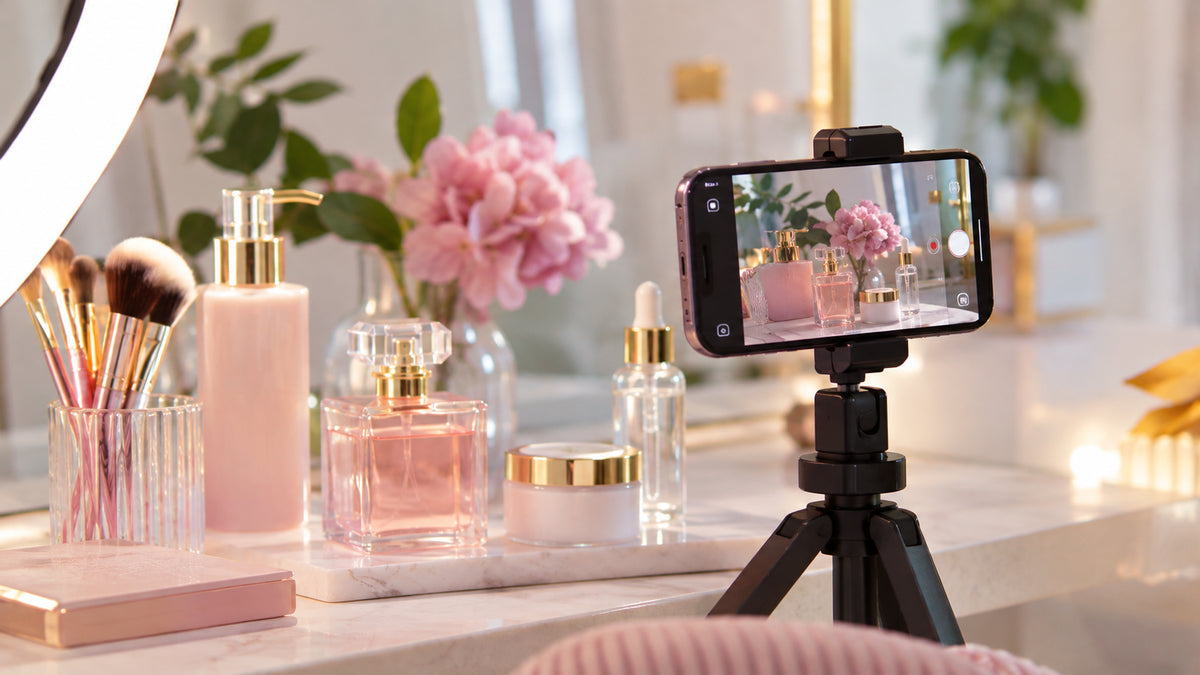
Beauty sellers can use short-form video content to demonstrate products while reaching potential customers and driving sales without having to spend a fortune on traditional advertising. Beauty brands on TikTok, Instagram Reels, and YouTube Shorts can share how-to’s on makeup looks, skincare tips, and consumers' testimonials.
A successful strategy combines creating visual storytelling showing clear product demonstrations and opportunities to turn viewers into buyers; in 2025, shoppable videos outperform static ads on social media.
Build Every Short-Form Video Around a Clear Hook
Consumers decide within seconds if they’re going to watch your video or scroll on by. Open with a customer problem, a question, or preview an application technique.
Don’t tell your viewer the foundation you’re using is made with XYZ ingredients. Show them how it melds with the skin. You could also ask, “Why does your lipstick always bleed?” before demonstrating a tip.
You can boil video content down into 4 parts:
-
Hook: Pose a question, state a problem, or display a strong visual.
-
Demonstration: Demonstrate your product, focus on one technique or benefit.
-
Benefit: Show the viewer how your product solves a customer problem.
-
Call to action: Send the viewer to your website to learn more about the product. Prompt them to pore over your shade range or ask questions.
Resist the urge to pack every benefit of your product into a single video; focus on one strong idea per video instead. Creating high-quality beauty content will allow you to connect with your audience and turn them into new consumers; there's a reason why over 85% of businesses use short-form video marketing.
Short-Form Content Formats and Ideas for Beauty Sellers
Different types of videos address different customer needs: Educationals demonstrate how products work, while comparison videos and customer testimonials help customers make purchase decisions.
How-To Tutorials and Quick Tips
Show one method of application, demonstrate the correct order to apply products, or answer a frequently asked beauty question. How-to layer skincare. How to blend cream contour. How to use leave-in conditioner.
Show close-up shots and provide captions that are large enough to read. Follow up by showing the finished application and name the products used.
Transformations and Product Comparisons
Before-and-after videos document what beauty products look like when they're applied. You can compare finishes of foundations, try on lipsticks, or display transformations with products that target certain beauty concerns.
Maintain the same lighting and camera angles when filming to create fair comparisons. Don't use filters or editing hacks that will distort how a product performs, and be truthful with skincare claims.
User-Generated Content and Customer Experiences
Unboxing videos and customer reviews feel authentic and give people a real sense of what to expect; 85% of consumers trust user-generated content over brand content.
Ask your customers to create and share their experience. If you re-share videos, make sure you have permission from your customers first. Working with beauty influencers and micro-creators is a great way to expose your product to the right audience. Also, user-generated content has 28% higher engagement rates than brand posts.
Share behind-the-scenes photos and videos of you preparing customer orders or telling your audience about your employees.
Beauty-Specific Content Ideas
Tailor the content to the products you carry:
-
Skincare: Product textures, ingredient breakdowns, skincare routines.
-
Makeup: Foundation matches, lip swatches, application tips.
-
Haircare: Styling tips, product matches, hair care routines.
-
Fragrance: Fragrance families, scent matches, layering tips.
Turn to your customer questions and product reviews for new ideas and questions buyers have as they decide what to buy.
Turn Short-Form Videos Into Beauty Product Sales
Gaining views is great, but beauty sellers should also try to bridge the gap between discovery and purchase.
Showcase your product, and center your content around pre-purchase questions like texture, finish, available shades, or application. TikTok, Instagram, and YouTube all offer shopping features where you can link your video directly to featured products, if available in your region/account.
Make sure your call to action aligns with the content of your video; you could prompt users to shop the products used in a makeup tutorial, or lead viewers to purchase options after comparing foundations.
Not every video needs a sales pitch; you don’t want to force a sales pitch on every video. Instructional content can help you gain saves/follows, and product demonstrations and reviews work well with direct shopping features.
If you’re going to link to your products, make sure those links go to the correct page, with proper pricing, description, and ability to purchase. Eliminating extra steps to find a product can minimize friction between discovery and purchase.
Optimize Beauty Videos for TikTok, Instagram Reels, and YouTube Shorts
While TikTok, Instagram Reels, and YouTube Shorts all allow sellers to post very similar content types, consider tailoring videos to how viewers browse and watch content on each app.
TikTok: Focus on Product Discovery
Create tutorials, walkthroughs, casual conversations, and real-life demos to showcase your products. Share beauty trends that apply to your products and answer consumer questions via video.
Eligible sellers are also able to link to your TikTok Shop page from your TikTok Shop-related content, making it easy for interested buyers to find out how they can purchase.
Instagram Reels: Build Brand Recognition
Publish short how-to videos that center around searchable beauty topics and questions your customers might have. Include detailed descriptions in the title of your video and be sure to demonstrate your technique.
Promote your Reels with Instagram Stories that highlight product details, answer common questions, and showcase new products.
YouTube Shorts: Create Educational Content
Concentrate on tutorials that are searchable. Think about questions your customers are asking that you can answer with short beauty tutorials. Write keyword-rich video titles and clearly show how-to’s.
YouTube Shorts can also be a preview for long-form content tutorials on how to use your beauty products or explain your products further on your channel.
Be sure to watermark-free any videos you publish elsewhere on your channel before reposting on TikTok, Instagram Reels, and YouTube Shorts. You should also edit captions, hashtags, and calls to action instead of posting the same content on each app.
Optimize Short-Form Videos for Search and Discovery
Users frequently turn to social media to search for beauty advice, product recommendations, and fixes for particular problems.
Pay attention to questions customers are asking in comments, reviews, and search auto-complete suggestions. Create content around topics like “how to use cream blush” or “how to layer your skincare.”
Try to naturally incorporate your main topic into the title, captions, spoken descriptions, and text overlays. Select hashtags relevant to your topic, not ones that are trending for an unrelated reason.
Consult your platform’s search and discovery analytics (if available) to see what content continues to pull in viewers. Keep in mind that factors like watch time, engagement, and content continuation matter here as well.
Film and Edit Beauty Videos Without Expensive Equipment
Beauty videos don’t need expensive gear. A smartphone paired with decent lighting and stability will get the job done; here are some tips on how to start.
-
Shoot near a window for natural lighting if possible, and keep your lighting setup consistent when filming comparisons. Set up your camera on a tripod and shoot close-ups to capture product textures, packaging, and application.
-
Upload vertical videos with an aspect ratio of 9:16. Consider uploading with a resolution of 1080 × 1920 as a helpful rule of thumb. Position copy away from your platform of choice’s navigation aids.
-
Edit videos to include subtitles for users who may have video sound off, cut out awkward silences, and emphasize key benefits with large, readable text. Silent viewing is a big deal for people who watch content at work or school, so your content should remain engaging even when viewed without sound.
Consider your video's length as well. How long does it take to demonstrate your product? Maybe 15 seconds for a lipstick swatch, but if you’re teaching users how to apply multiple products in a skincare routine, you will need more time.
Measure Short-Form Video Performance
Measure success based on your video’s intended goal. Saveable educational shorts should focus on saves and shares. Product demo videos should drive clicks and purchasing intent in addition to views.
Focus on these metrics:
-
Watch time and retention: How much of your video is actually being watched?
-
Saves and shares: Measure the usefulness of educational content.
-
Product clicks: If you’re featuring products in your shorts, are people clicking to learn more?
-
Conversion rate: Of the people you’re tracking from your videos, how many are taking some type of desired action on your site?
-
Attributed sales: How much revenue can you tie back to your videos? (You’ll need reliable tracking for this.)
Use your data to enhance future videos. Low watch times could mean you need to work on your hook. If people are clicking on your products but not buying, there could be an issue with your product descriptions, pricing, or checkout process. Test different hooks, demos, and calls to action until you find what works.
Plan a Beautiful Short-Form Video Workflow
Consistency matters, but publishing short-form videos daily is unnecessary. Your workflow doesn’t have to be complicated to be effective.
Film several videos per month according to your content calendar and sort them into themed folders by video format. Schedule posts ahead of time based on new launches and trending searches among your buyers.
For example, you might film beauty tips every Monday, launch new products on Wednesdays, and highlight a Friday Favorites review or repost from a buyer every Friday.
Map out your content calendar with filming days and topics, as well as when you’ll promote videos on social media. Assess your analytics monthly and move videos around on your calendar as needed based on performance and capacity.
Remember, your short-form video content should offer value to your audience by teaching how-tos and featuring real customer testimonials with easy links to buy. Stay helpful, and your viewers will trust you.
FAQ
What types of short-form videos work best for selling beauty products?
Product demos, makeup tutorials, before/after posts, and customer testimonials are all great formats for beauty sellers. Content that solves common customer problems or features products being used in real life will showcase your value and give potential buyers the information they need to purchase with confidence.
Which platform is best for short-form beauty videos?
TikTok can be great for product discovery and reaching new audiences by leveraging trends and authentic product demos. Reels are great for building brand awareness and engaging with customers on Instagram, and YouTube Shorts allow you to create searchable beauty tutorials. Consider which short-form video platforms your target customers are on and how your products and marketing goals can best be served by each platform.
How can beauty sellers turn short-form video views into sales?
Highlight your product benefits and teach customers how they can solve pain points with your product line. Include clear calls-to-action and use features like shoppable posts when available. Link to your product page when applicable and provide viewers with correct pricing and product info. Make sure you're tracking clicks and conversions to see which videos are driving sales.


